分子催化剂电化学活化氮气用于可持续合成氨
收稿日期: 2025-12-26
修回日期: 2026-01-28
录用日期: 2026-02-13
网络出版日期: 2026-02-13
Molecular Catalysts for Electrochemical Nitrogen Activation toward Sustainable Ammonia Synthesis
Xian-Biao Fu conceptualized the work, supervised the project, and revised the manuscript. Jin-Xiu Han and Hao Xue wrote the original draft and prepared the figures. All authors discussed the content and approved the final version.
#Jin-Xiu Han and Hao Xue contributed equally to this work.
Received date: 2025-12-26
Revised date: 2026-01-28
Accepted date: 2026-02-13
Online published: 2026-02-13
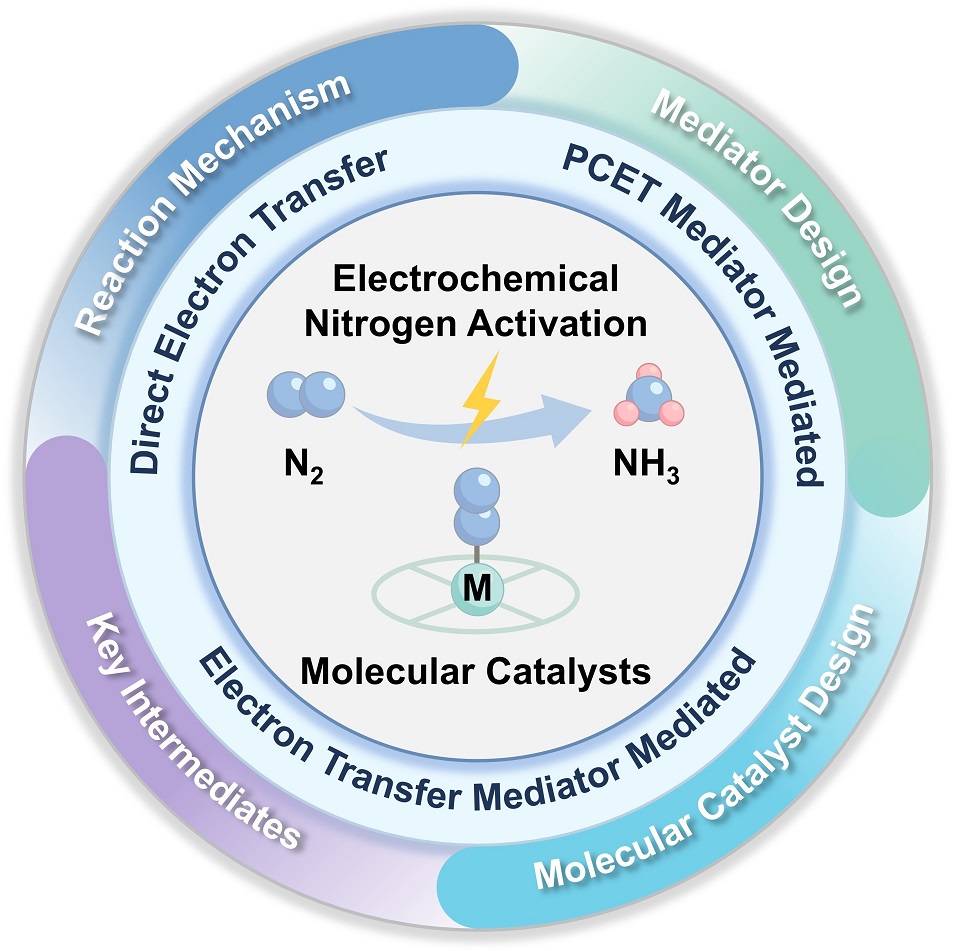
均相电催化氮气还原反应(NRR)可在温和条件下探索分子固氮路径,并通过调控金属中心、配体骨架与反应介质构建和优化催化体系,从而在分子层面捕获关键固氮中间体。然而,该领域仍受制于所需还原电势较负、析氢反应竞争强、可持续周转频率受限及长期稳定性不足等瓶颈。本综述以“电子如何递送至分子活性中心”为主线,对均相电化学氮气活化/转化体系进行分类:一类为直接电子传递(DET),电极将电子传递给可循环的介导体“mediator”,再由介导体在均相体系中传递给催化循环。介导体系进一步分为仅传递电子的电子转移(ET)介导体与实现质子-电子耦合递送的PCET介导体。在DET部分,我们梳理从早期低价钛、钨物种到近年来广泛研究的钼、铁、铼分子配合物的结构与反应过程中的关键中间体,并将机理归纳为两条主路径:其一为“cleavage-first”断键路径,通过N≡N裂解生成可分离/可表征的金属氮化物(M≡N);其二为“PCET-first”路径,在保持N-N键的前提下逐步氢化形成NxHy中间体并进一步生成氨。上述归纳为建立配体电子效应、二级配位层、多金属协同及溶剂/电解质微环境与选择性之间的构效关系提供参考。在介导部分,ET介导体可在一定程度上将强还原需求从催化剂本体“外移”,缓冲过强的还原环境并降低失活风险;PCET介导体则依托可调的氧化还原电位与介体-H键强度(BDFE),以更可控的方式进行电子/质子转移,从而促进中间体氢化并提升有效活性与周转数。最后,我们强调均相电催化氮气还原的研究仍需坚持严格的污染控制与定量产物鉴定标准,并指出有必要通过更合理的分子与体系层面设计提升催化反应在长时间运行下的稳定性。进一步地,我们展望了可将介导体策略、分子催化剂设计与电解槽工程相结合,推动均相体系由机理模型迈向具备规模化潜力的电化学合成氨器件。
韩金秀 , 薛皓 , 付先彪 . 分子催化剂电化学活化氮气用于可持续合成氨[J]. 电化学, 2026 , 32(4) : 2517002 . DOI: 10.61558/2993-074X.3606
Homogeneous electrocatalytic nitrogen reduction reaction (NRR) provides a powerful framework to interrogate molecular nitrogen-fixation pathways under mild conditions. By tuning the metal center, ligand architecture, and reaction medium, these systems enable capturing key intermediates and delivering mechanistic insight at molecular-level resolution. Nevertheless, advances remain constrained by highly reduced operating potentials, intense competition from the hydrogen evolution reaction (HER), limited durability in turnover, and inadequate long-term stability.
In this review, we take electron delivery to the molecular active site as the guiding principle for organizing homogeneous electrochemical N2 activation and transformation. We classify reported systems into direct electron transfer (DET), in which the electrode reduces the molecular catalyst directly, and mediated electron transfer (MET), in which the electrode reduces a redox mediator, and the reduced mediator subsequently transfers electrons to the molecular catalyst to access the active states that drive N2 conversion. Mediated systems are further divided into electron-transfer (ET) mediators, which shuttle electrons only, and proton-coupled electron transfer (PCET) mediators, which deliver coupled proton-electron equivalents. For DET systems, we chart progress from early low-valent Ti and W species to widely studied Mo, Fe, and Re complexes, highlighting structurally defined intermediates identified along the reaction pathway. Mechanistically, DET reactivity commonly falls into two routes: a cleavage-first pathway that splits N≡N to form isolable, characterizable metal nitride (M≡N), and a PCET-first pathway that preserves the N−N bond, with stepwise hydrogenation generating NxHy intermediates before NH3 release. This perspective clarifies how ligand electronics, secondary-sphere design, multimetal cooperativity, and solvent/electrolyte microenvironments together control activity and selectivity in NRR. In mediated electrocatalysis, ET mediators can partly shift the burden of extreme reducing conditions away from the catalyst, shielding it from over-reduction and deactivation. PCET mediators, enabled by tunable redox potentials and mediator−H bond strengths, offer a more controlled route for coupled proton/electron transfer, thereby accelerating intermediate hydrogenation, and improving effective activity and turnover of electrocatalytic NRR. Finally, we emphasize that homogeneous NRR still demands stringent contamination control and quantitative product identification, and we highlight the need for more rational molecular- and system-level design strategies to enhance stability and durability under extended operation. Looking ahead, integrating mediator strategies, molecular catalyst design, and electrolyzer engineering could help move homogeneous platforms from mechanistic models toward scalable electrochemical ammonia devices.
| [1] | J G Chen, R M Crooks, L C Seefeldt, K L Bren, R M Bullock, M Y Darensbourg, P L Holland, B Hoffman, M J Janik, A K Jones, M G Kanatzidis, P King, K M Lancaster, S V Lymar, P Pfromm, W F Schneider, R R Schrock. Beyond fossil fuel-driven nitrogen transformations[J]. Science, 2018, 360(6391): eaar6611. http://dx.doi.org/10.1126/science.aar6611. |
| [2] | Fu X B, J B Pedersen, Zhou Y Y, M Saccoccio, S Li, R Sa?inas, K Li, S Z Andersen, A Xu, N H Deissler, J B V Mygind, C Wei, J Kibsgaard, P C K Vesborg, J K N?rskov, I Chorkendorff. Continuous-flow electrosynthesis of ammonia by nitrogen reduction and hydrogen oxidation[J]. Science, 2023, 379(6633): 707-712. http://dx.doi.org/10.1126/science.adf4403. |
| [3] | Huang Z L, M Rafiq, A R Woldu, Tong Q X, D Astruc, Hu L S. Recent progress in electrocatalytic nitrogen reduction to ammonia (NRR)[J]. Coord. Chem. Rev., 2023, 478: 214981. http://dx.doi.org/10.1016/j.ccr.2022.214981. |
| [4] | D R MacFarlane, P V Cherepanov, J Choi, B H R Suryanto, R Y Hodgetts, J M Bakker, F M Ferrero Vallana, A N Simonov. A roadmap to the ammonia economy[J]. Joule, 2020, 4(6): 1186-1205. http://dx.doi.org/10.1016/j.joule.2020.04.004. |
| [5] | Wen Z X, Huang B, Wang Y L, Wang K, Tu X, Xie P F, Fu X B. Ammonia as a renewable energy carrier from synthesis to utilization[J]. Nat. Rev. Clean Technol., 2025, 1(11): 755-770. http://dx.doi.org/10.1038/s44359-025-00102-9. |
| [6] | O Einsle, F A Tezcan, S L A Andrade, B Schmid, M Yoshida, J B Howard, D C Rees. Nitrogenase MoFe-protein at 1.16 ? resolution: a central ligand in the FeMo-cofactor[J]. Science, 2002, 297(5587): 1696-1700. http://dx.doi.org/10.1126/science.1073877. |
| [7] | Y Tanabe, Y Nishibayashi. Recent advances in nitrogen fixation upon vanadium complexes[J]. Coord. Chem. Rev., 2019, 381: 135-150. http://dx.doi.org/10.1016/j.ccr.2018.11.005. |
| [8] | Y Tanabe, Y Nishibayashi. Catalytic nitrogen fixation using well-defined molecular catalysts under ambient or mild reaction conditions[J]. Angew. Chem. Int. Ed., 2024, 63(33): e202406404. http://dx.doi.org/10.1002/anie.202406404. |
| [9] | R D Milton, S Abdellaoui, N Khadka, D R Dean, D Leech, L C Seefeldt, S D Minteer. Nitrogenase bioelectrocatalysis: heterogeneous ammonia and hydrogen production by MoFe protein[J]. Energy Environ. Sci., 2016, 9(8): 2550-2554. http://dx.doi.org/10.1039/C6EE01432A. |
| [10] | B M Hoffman, D Lukoyanov, Yang Z Y, D R Dean, L C Seefeldt. Mechanism of nitrogen fixation by nitrogenase: the next stage[J]. Chem. Rev., 2014, 114(8): 4041-4062. http://dx.doi.org/10.1021/cr400641x. |
| [11] | V V Gande, N C Kani, I Goyal, R Chauhan, Y Qi, S A Olusegun, J A Gauthier, M R Singh. Advancements in dinitrogen activation for catalytic breakthroughs[J]. EES Catal., 2025, 3(5): 883-920. http://dx.doi.org/10.1039/D5EY00033E. |
| [12] | R D Milton, R Cai, S Abdellaoui, D Leech, A L De Lacey, M Pita, S D Minteer. Bioelectrochemical Haber-Bosch process: an ammonia-producing H2/N2 fuel cell[J]. Angew. Chem. Int. Ed., 2017, 56(10): 2680-2683. http://dx.doi.org/10.1002/anie.201612500. |
| [13] | F Masero, M A Perrin, S Dey, V Mougel. Dinitrogen fixation: rationalizing strategies utilizing molecular complexes[J]. Chem. Eur. J., 2021, 27(12): 3892-3928. http://dx.doi.org/10.1002/chem.202003134. |
| [14] | J W Erisman, M A Sutton, J Galloway, Z Klimont, W Winiwarter. How a century of ammonia synthesis changed the world[J]. Nat. Geosci., 2008, 1(10): 636-639. http://dx.doi.org/10.1038/ngeo325. |
| [15] | F Haber, R Le Rossignol. über die technische darstellung von ammoniak aus den elementen[J]. Z. Elektrochem. Angew. Phys. Chem., 1913, 19(2): 53-72. http://dx.doi.org/10.1002/bbpc.19130190201. |
| [16] | S L Foster, S I P Bakovic, R D Duda, S Maheshwari, R D Milton, S D Minteer, M J Janik, J N Renner, L F Greenlee. Catalysts for nitrogen reduction to ammonia[J]. Nat. Catal., 2018, 1(7): 490-500. http://dx.doi.org/10.1038/s41929-018-0092-7. |
| [17] | I McPherson, Zhang J. Can electrification of ammonia synthesis decrease its carbon footprint?[J]. Joule, 2020, 4(1): 12-14. http://dx.doi.org/10.1016/j.joule.2019.12.013. |
| [18] | S T Wismann, J S Engb?k, S B Vendelbo, F B Bendixen, W L Eriksen, K Aasberg-Petersen, C Frandsen, I Chorkendorff, P M Mortensen. Electrified methane reforming: a compact approach to greener industrial hydrogen production[J]. Science, 2019, 364(6442): 756-759. http://dx.doi.org/10.1126/science.aaw8775. |
| [19] | J N?rskov, J Chen, R Miranda, T Fitzsimmons, R Stack. Sustainable ammonia synthesis - Exploring the scientific challenges associated with discovering alternative, sustainable processes for ammonia production[M]. United States, 2016. http://dx.doi.org/10.2172/1283146. |
| [20] | Ammonia: zero-carbon fertiliser, fuel and energy store[R]. Policy Briefing, 2020. https://royalsociety.org/green-ammonia. |
| [21] | G Soloveichik. Renewable energy to fuelsthrough utilization of energy dense liquids(REFUEL). ARPA-E[R]. 2016. https://arpa-e.energy.gov/?q=arpa-e-programs/refuel. |
| [22] | C Smith, A K Hill, L Torrente-Murciano. Current and future role of Haber-Bosch ammonia in a carbon-free energy landscape[J]. Energy Environ. Sci., 2020, 13(2): 331-344. http://dx.doi.org/10.1039/C9EE02873K. |
| [23] | V Kyriakou, I Garagounis, A Vourros, E Vasileiou, M Stoukides. An electrochemical Haber-Bosch process[J]. Joule, 2020, 4(1): 142-158. http://dx.doi.org/10.1016/j.joule.2019.10.006. |
| [24] | Xiao L, Mou S Y, Lin X Y, Wu K Y, Liu S Y, Dai W D, Yang W P, Tang C Y, Long C, Dong F. Techno-economic assessment of plasma-driven air oxidation coupled with electroreduction synthesis of ammonia[J]. Green Energy Environ., 2025, 10(9): 1901-1910. http://dx.doi.org/10.1016/j.gee.2025.03.009. |
| [25] | Li L Q, Tang C, Cui X Y, Zheng Y, Wang X S, Xu H L, Zhang S, Shao T, K Davey, Qiao S Z. Efficient nitrogen fixation to ammonia through integration of plasma oxidation with electrocatalytic reduction[J]. Angew. Chem. Int. Ed., 2021, 60(25): 14131-14137. http://dx.doi.org/10.1002/anie.202104394. |
| [26] | Xu H, Ma Y Y, Chen J, Zhang W X, Yang J P. Electrocatalytic reduction of nitrate - a step towards a sustainable nitrogen cycle[J]. Chem. Soc. Rev., 2022, 51(7): 2710-2758. http://dx.doi.org/10.1039/D1CS00857A. |
| [27] | Qing G, Ghazfar R, Jackowski S T, Habibzadeh F, Ashtiani M M, Chen C P, Smith M R III, Hamann T W. Recent advances and challenges of electrocatalytic N2 reduction to ammonia[J]. Chem. Rev., 2020, 120(12): 5437-5516. http://dx.doi.org/10.1021/acs.chemrev.9b00659. |
| [28] | Yang B, Ding W L, Zhang H H, Zhang S J. Recent progress in electrochemical synthesis of ammonia from nitrogen: strategies to improve the catalytic activity and selectivity[J]. Energy Environ. Sci., 2021, 14(2): 672-687. http://dx.doi.org/10.1039/D0EE02263B. |
| [29] | Iriawan H, Andersen S Z, Zhang X, Comer B M, Barrio J, Chen P, Medford A J, Stephens I E L, Chorkendorff I, Shao-Horn Y. Methods for nitrogen activation by reduction and oxidation[J]. Nat. Rev. Methods Primers, 2021, 1(1): 56. http://dx.doi.org/10.1038/s43586-021-00053-y. |
| [30] | M Ali, Zhou F L, Chen K, C Kotzur, Xiao C L, L Bourgeois, Zhang X Y, D R MacFarlane. Nanostructured photoelectrochemical solar cell for nitrogen reduction using plasmon-enhanced black silicon[J]. Nat. Commun., 2016, 7(1): 11335. http://dx.doi.org/10.1038/ncomms11335. |
| [31] | Ashida Y, Onozuka Y, Arashiba K, Konomi A, Tanaka H, Kuriyama S, Yamazaki Y, Yoshizawa K, Nishibayashi Y. Catalytic nitrogen fixation using visible light energy[J]. Nat. Commun., 2022, 13(1): 7263. http://dx.doi.org/10.1038/s41467-022-34984-1. |
| [32] | Collado L, Pizarro A H, Barawi M, García-Tecedor M, Liras M, de la Pe?a O'Shea V A. Light-driven nitrogen fixation routes for green ammonia production[J]. Chem. Soc. Rev., 2024, 53(23): 11334-11389. http://dx.doi.org/10.1039/D3CS01075A. |
| [33] | Je?i? D, Pomeroy B, Kamal K M, Kova?i? ?, Hu? M, Likozar B. Photo- and photoelectrocatalysis in nitrogen reduction reactions to ammonia: interfaces, mechanisms, and modeling simulations[J]. Adv. Energy Sustain. Res., 2024, 5(9): 2400083. http://dx.doi.org/10.1002/aesr.202400083. |
| [34] | Zheng J Y, Lyu Y H, Qiao M, Wang R L, Zhou Y Y, Li H, Chen C, Li Y F, Zhou H J, Jiang S P, Wang S Y. Photoelectrochemical synthesis of ammonia on the aerophilic-hydrophilic heterostructure with 37.8% efficiency[J]. Chem, 2019, 5(3): 617-633. http://dx.doi.org/10.1016/j.chempr.2018.12.003. |
| [35] | Shilov A E. Catalytic reduction of molecular nitrogen in solutions[J]. Russ. Chem. Bull., 2003, 52(12): 2555-2562. http://dx.doi.org/10.1023/B:RUCB.0000019873.81002.60. |
| [36] | Yan X, Liu D L, Cao H H, Hou F, Liang J, Dou S X. Nitrogen reduction to ammonia on atomic-scale active sites under mild conditions[J]. Small Methods, 2019, 3(9): 1800501. http://dx.doi.org/10.1002/smtd.201800501. |
| [37] | Jia H P, E A Quadrelli. Mechanistic aspects of dinitrogen cleavage and hydrogenation to produce ammonia in catalysis and organometallic chemistry: relevance of metal hydride bonds and dihydrogen[J]. Chem. Soc. Rev., 2014, 43(2): 547-564. http://dx.doi.org/10.1039/C3CS60206K. |
| [38] | A Rovaletti, L De Gioia, C Greco, F Arrigoni. Activation of the N2 molecule by means of low-valence complexes of calcium and magnesium[J]. Dalton Trans., 2023, 52(23): 7966-7974. http://dx.doi.org/10.1039/D3DT00945A. |
| [39] | Merakeb L, Robert M. Advances in molecular electrochemical activation of dinitrogen[J]. Curr. Opin. Electrochem., 2021, 29: 100834. https://doi.org/10.1016/j.coelec.2021.100834. |
| [40] | Han D L, Yang L, Huang H, P Chakraborty, S U Dighe, Huang K W. Combinations of electron and proton donors in transition-metal complex mediated nitrogen reduction reactions[J]. Sci. China Chem., 2024, 67(7): 2136-2154. http://dx.doi.org/10.1007/s11426-023-1991-1. |
| [41] | Treitel I M, Flood M T, Marsh R E, Gray H B. Molecular and electronic structure of μ-nitrogen-decaamminediruthenium(II)[J]. J. Am. Chem. Soc., 1969, 91(23): 6512-6513. http://dx.doi.org/10.1021/ja01051a070. |
| [42] | Powell C B, Hall M B. Molecular orbital calculations on dinitrogen-bridged transition-metal dimers[J]. Inorg. Chem., 1984, 23(26): 4619-4627. http://dx.doi.org/10.1021/ic00194a042. |
| [43] | Laplaza C E, Johnson M J A, Peters J C, Odom A L, Kim E, Cummins C C, George G N, Pickering I J. Dinitrogen cleavage by three-coordinate molybdenum(III) complexes:? mechanistic and structural data[J]. J. Am. Chem. Soc., 1996, 118(36): 8623-8638. http://dx.doi.org/10.1021/ja960574x. |
| [44] | Frenking G, Fr?hlich N. The nature of the bonding in transition-metal compounds[J]. Chem. Rev., 2000, 100(2): 717-774. http://dx.doi.org/10.1021/cr980401l. |
| [45] | Dewar J S. A review of the pi-complex theory[J]. Bull. Soc. Chim. Fr., 1951, 18(3-4): C71-C79. https://doi.org/10.1016/S0022-328X(01)01155-X. |
| [46] | Chatt J, Duncanson L A. Olefin co-ordination compounds. Part III.* Infra-red spectra and structure: attempted preparation of acetylene complexes[J]. J. Chem. Soc., 1953, 2939-2947. http://dx.doi.org/10.1039/JR9530002939. |
| [47] | Hasanayn F, Holland P L, Goldman A S, Miller A J M. Lewis structures and the bonding classification of end-on bridging dinitrogen transition metal complexes[J]. J. Am. Chem. Soc., 2023, 145(8): 4326-4342. http://dx.doi.org/10.1021/jacs.2c12243. |
| [48] | Yandulov D V, Schrock R R. Catalytic reduction of dinitrogen to ammonia at a single molybdenum center[J]. Science, 2003, 301(5629): 76-78. http://dx.doi.org/10.1126/science.1085326. |
| [49] | Arashiba K, Miyake Y, Nishibayashi Y. A molybdenum complex bearing PNP-type pincer ligands leads to the catalytic reduction of dinitrogen into ammonia[J]. Nat. Chem., 2011, 3(2): 120-125. http://dx.doi.org/10.1038/nchem.906. |
| [50] | Anderson J S, Rittle J, Peters J C. Catalytic conversion of nitrogen to ammonia by an iron model complex[J]. Nature, 2013, 501(7465): 84-87. http://dx.doi.org/10.1038/nature12435. |
| [51] | McWilliams S F, Holland P L. Dinitrogen binding and cleavage by multinuclear iron complexes[J]. Acc. Chem. Res., 2015, 48(7): 2059-2065. http://dx.doi.org/10.1021/acs.accounts.5b00213. |
| [52] | Crossland J L, Tyler D R. Iron-dinitrogen coordination chemistry: dinitrogen activation and reactivity[J]. Coord. Chem. Rev., 2010, 254(17): 1883-1894. http://dx.doi.org/10.1016/j.ccr.2010.01.005. |
| [53] | Roux Y, Duboc C, Gennari M. Molecular catalysts for N2 reduction: state of the art, mechanism, and challenges[J]. ChemPhysChem, 2017, 18(19): 2606-2617. http://dx.doi.org/10.1002/cphc.201700665. |
| [54] | MacLeod K C, Holland P L. Recent developments in the homogeneous reduction of dinitrogen by molybdenum and iron[J]. Nat. Chem., 2013, 5(7): 559-565. http://dx.doi.org/10.1038/nchem.1620. |
| [55] | Bruch Q J, Connor G P, McMillion N D, Goldman A S, Hasanayn F, Holland P L, Miller A J M. Considering electrocatalytic ammonia synthesis via bimetallic dinitrogen cleavage[J]. ACS Catal., 2020, 10(19): 10826-10846. http://dx.doi.org/10.1021/acscatal.0c02606. |
| [56] | Singh D, Buratto W R, Torres J F, Murray L J. Activation of dinitrogen by polynuclear metal complexes[J]. Chem. Rev., 2020, 120(12): 5517-5581. http://dx.doi.org/10.1021/acs.chemrev.0c00042. |
| [57] | Chalkley M J, Drover M W, Peters J C. Catalytic N2-to-NH3 (or -N2H4) conversion by well-defined molecular coordination complexes[J]. Chem. Rev., 2020, 120(12): 5582-5636. http://dx.doi.org/10.1021/acs.chemrev.9b00638. |
| [58] | Chatt J, Pearman A J, Richards R L. The reduction of mono-coordinated molecular nitrogen to ammonia in a protic environment[J]. Nature, 1975, 253(5486): 39-40. http://dx.doi.org/10.1038/253039b0. |
| [59] | Laplaza C E, Cummins C C. Dinitrogen cleavage by a three-coordinate molybdenum(III) complex[J]. Science, 1995, 268(5212): 861-863. http://dx.doi.org/10.1126/science.268.5212.861. |
| [60] | Siu J C, Fu N K, Lin S. Catalyzing electrosynthesis: a homogeneous electrocatalytic approach to reaction discovery[J]. Acc. Chem. Res., 2020, 53(3): 547-560. http://dx.doi.org/10.1021/acs.accounts.9b00529. |
| [61] | van Tamelen E E, Akermark B. Electrolytic reduction of molecular nitrogen[J]. J. Am. Chem. Soc., 1968, 90(16): 4492-4493. http://dx.doi.org/10.1021/ja01018a074. |
| [62] | Pickett C J, Talarmin J. Electrosynthesis of ammonia[J]. Nature, 1985, 317(6038): 652-653. http://dx.doi.org/10.1038/317652a0. |
| [63] | Katayama A, Ohta T, Wasada-Tsutsui Y, Inomata T, Ozawa T, Ogura T, Masuda H. Dinitrogen-molybdenum complex induces dinitrogen cleavage by one-electron oxidation[J]. Angew. Chem. Int. Ed., 2019, 58(33): 11279-11284. http://dx.doi.org/10.1002/anie.201905299. |
| [64] | Merakeb L, Bennaamane S, De Freitas J, Clot E, Mézailles N, Robert M. Molecular electrochemical reductive splitting of dinitrogen with a molybdenum complex[J]. Angew. Chem. Int. Ed., 2022, 61(40): e202209899. http://dx.doi.org/10.1002/anie.202209899. |
| [65] | Bruch Q J, Malakar S, Goldman A S, Miller A J M. Mechanisms of electrochemical N2 splitting by a molybdenum pincer complex[J]. Inorg. Chem., 2022, 61(4): 2307-2318. http://dx.doi.org/10.1021/acs.inorgchem.1c03698. |
| [66] | Lindley B M, van Alten R S, Finger M, Schendzielorz F, Würtele C, Miller A J M, Siewert I, Schneider S. Mechanism of chemical and electrochemical N2 splitting by a rhenium pincer complex[J]. J. Am. Chem. Soc., 2018, 140(25): 7922-7935. http://dx.doi.org/10.1021/jacs.8b03755. |
| [67] | Silantyev G A, F?rster M, Schluscha? B, Abbenseth J, Würtele C, Volkmann C, Holthausen M C, Schneider S. Dinitrogen splitting coupled to protonation[J]. Angew. Chem. Int. Ed., 2017, 56(21): 5872-5876. http://dx.doi.org/10.1002/anie.201701504. |
| [68] | Arashiba K, Eizawa A, Tanaka H, Nakajima K, Yoshizawa K, Nishibayashi Y. Catalytic nitrogen fixation via direct cleavage of nitrogen-nitrogen triple bond of molecular dinitrogen under ambient reaction conditions[J]. Bull. Chem. Soc. Jpn., 2017, 90(10): 1111-1118. http://dx.doi.org/10.1246/bcsj.20170197. |
| [69] | Ibrahim A F, Garrido-Barros P, Peters J C. Electrocatalytic nitrogen reduction on a molybdenum complex bearing a PNP pincer ligand[J]. ACS Catal., 2023, 13(1): 72-78. http://dx.doi.org/10.1021/acscatal.2c04769. |
| [70] | Del Castillo T J, Thompson N B, Peters J C. A synthetic single-site Fe nitrogenase: high turnover, freeze-quench 57Fe M?ssbauer data, and a hydride resting state[J]. J. Am. Chem. Soc., 2016, 138(16): 5341-5350. http://dx.doi.org/10.1021/jacs.6b01706. |
| [71] | Maman M P, Gurusamy T, Pal A K, Jana R, Ramanujam K, Datta A, Mandal S. Electrocatalytic reduction of nitrogen to ammonia using tiara-like phenylethanethiolated nickel cluster[J]. Angew. Chem. Int. Ed., 2023, 62(27): e202305462. http://dx.doi.org/10.1002/anie.202305462. |
| [72] | Das A, Barman S, Dey A. Electrocatalytic reduction of nitrogen to ammonia using a trinuclear nickel thiolate complex[J]. J. Am. Chem. Soc., 2025, 147(36): 32341-32346. http://dx.doi.org/10.1021/jacs.5c09896. |
| [73] | Tzaguy A, Masip-Sánchez A, Avram L, Solé-Daura A, López X, Poblet J M, Neumann R. Electrocatalytic reduction of dinitrogen to ammonia with water as proton and electron donor catalyzed by a combination of a tri-ironoxotungstate and an alkali metal cation[J]. J. Am. Chem. Soc., 2023, 145(36): 19912-19924. http://dx.doi.org/10.1021/jacs.3c06167. |
| [74] | Peters J C. Advancing electrocatalytic nitrogen fixation: insights from molecular systems[J]. Faraday Discuss., 2023, 243(0): 450-472. http://dx.doi.org/10.1039/D3FD00017F. |
| [75] | Reid A G, Machan C W. Redox mediators in homogeneous Co-electrocatalysis[J]. J. Am. Chem. Soc., 2023, 145(4): 2013-2027. http://dx.doi.org/10.1021/jacs.2c10033. |
| [76] | Francke R, Little R D. Redox catalysis in organic electrosynthesis: basic principles and recent developments[J]. Chem. Soc. Rev., 2014, 43(8): 2492-2521. http://dx.doi.org/10.1039/C3CS60464K. |
| [77] | Reid A G, Moreno J J, Hooe S L, Baugh K R, Thomas I H, Dickie D A, Machan C W. Inverse potential scaling in co-electrocatalytic activity for CO2 reduction through redox mediator tuning and catalyst design[J]. Chem. Sci., 2022, 13(33): 9595-9606. http://dx.doi.org/10.1039/D2SC03258A. |
| [78] | Armstrong F A, Hirst J. Reversibility and efficiency in electrocatalytic energy conversion and lessons from enzymes[J]. Proc. Natl. Acad. Sci. U.S.A., 2011, 108(34): 14049-14054. http://dx.doi.org/10.1073/pnas.1103697108. |
| [79] | Reid A G, Zelenke E A, Moberg M E, Dickie D A, Machan C W. Improving co-electrocatalytic carbon dioxide reduction by optimizing the relative potentials of the redox mediator and catalyst[J]. Chem. Commun., 2024, 60(63): 8208-8211. http://dx.doi.org/10.1039/D4CC01988A. |
| [80] | Cardinale L, Stahl S S, Kalyani D, Lehnherr D. Chapter two-overview of outer-sphere electron transfer mediators for electrosynthesis[M]// HeviaE, Pérez-TempranoM H, DiéguezM. Advances in Catalysis, Academic Press (Elsevier), 2023: 57-102. http://dx.doi.org/10.1016/bs.acat.2023.07.009. |
| [81] | Zhu J R, Stahl S S. Use of electron-transfer mediators to access higher electrochemical current densities in Ni-catalyzed cross-electrophile coupling[J]. J. Am. Chem. Soc., 2025, 147(40): 36053-36058. http://dx.doi.org/10.1021/jacs.5c10599. |
| [82] | Ashida Y, Arashiba K, Nakajima K, Nishibayashi Y. Molybdenum-catalysed ammonia production with samarium diiodide and alcohols or water[J]. Nature, 2019, 568(7753): 536-540. http://dx.doi.org/10.1038/s41586-019-1134-2. |
| [83] | Ashida Y, Mizushima T, Arashiba K, Egi A, Tanaka H, Yoshizawa K, Nishibayashi Y. Catalytic production of ammonia from dinitrogen employing molybdenum complexes bearing N-heterocyclic carbene-based PCP-type pincer ligands[J]. Nat. Synth., 2023, 2(7): 635-644. http://dx.doi.org/10.1038/s44160-023-00292-9. |
| [84] | Boyd E A, Jung H, Peters J C. Samarium as a catalytic electron-transfer mediator in electrocatalytic nitrogen reduction to ammonia[J]. J. Am. Chem. Soc., 2025, 147(6): 4695-4700. http://dx.doi.org/10.1021/jacs.4c14845. |
| [85] | Klein C K, Lindenfelser A, Yusov M A, Jain A, Jones R J R, Gregoire J, Manthiram K. Sodium-mediated redox cascade for electrochemical ammonia synthesis[J]. Joule, 2025, 9(5): 101923. http://dx.doi.org/10.1016/j.joule.2025.101923. |
| [86] | Van Tamelen E E, Seeley D A, Schneller S W, Rudler H, Cretney W. Intermediates in the titanocene-promoted fixation-reduction of molecular nitrogen[J]. J. Am. Chem. Soc., 1970, 92(17): 5251-5253. http://dx.doi.org/10.1021/ja00720a060. |
| [87] | Van Tamelen E E, Boche G, Ela S W, Fechter R B. Direct ammonia formation under mild conditions by molecular nitrogen reducing systems based on organic titanium species[J]. J. Am. Chem. Soc., 1967, 89(22): 5707-5708. http://dx.doi.org/10.1021/ja00998a039. |
| [88] | Agarwal R G, Coste S C, Groff B D, Heuer A M, Noh H, Parada G A, Wise C F, Nichols E M, Warren J J, Mayer J M. Free energies of proton-coupled electron transfer reagents and their applications[J]. Chem. Rev., 2022, 122(1): 1-49. http://dx.doi.org/10.1021/acs.chemrev.1c00521. |
| [89] | Chalkley M J, Del Castillo T J, Matson B D, Peters J C. Fe-mediated nitrogen fixation with a metallocene mediator: exploring pka effects and demonstrating electrocatalysis[J]. J. Am. Chem. Soc., 2018, 140(19): 6122-6129. http://dx.doi.org/10.1021/jacs.8b02335. |
| [90] | Garrido-Barros P, Derosa J, Chalkley M J, Peters J C. Tandem electrocatalytic N2 fixation via proton-coupled electron transfer[J]. Nature, 2022, 609(7925): 71-76. http://dx.doi.org/10.1038/s41586-022-05011-6. |
| [91] | Tang S L, Mao C L, Zhao G S, Ye J, Qu W Q, Wu L, Ozin G. Fact or fiction: what is in your 15N2 and15NH3 cylinders for sustainable ammonia and urea research?[J]. iScience, 2025, 28(4): 112072. http://dx.doi.org/10.1016/j.isci.2025.112072. |
| [92] | Andersen S Z, ?oli? V, Yang S, Schwalbe J A, Nielander A C, McEnaney J M, Enemark-Rasmussen K, Baker J G, Singh A R, Rohr B A, Statt M J, Blair S J, Mezzavilla S, Kibsgaard J, Vesborg P C K, Cargnello M, Bent S F, Jaramillo T F, Stephens I E L, N?rskov J K, Chorkendorff I. A rigorous electrochemical ammonia synthesis protocol with quantitative isotope measurements[J]. Nature, 2019, 570(7762): 504-508. http://dx.doi.org/10.1038/s41586-019-1260-x. |
| [93] | Solis B H, Hammes-Schiffer S. Proton-coupled electron transfer in molecular electrocatalysis: theoretical methods and design principles[J]. Inorg. Chem., 2014, 53(13): 6427-6443. http://dx.doi.org/10.1021/ic5002896. |
| [94] | Horn M R, Singh A, Alomari S, Goberna-Ferrón S, Benages-Vilau R, Chodankar N, Motta N, Ostrikov K, MacLeod J, Sonar P, Gomez-Romero P, Dubal D. Polyoxometalates (POMs): from electroactive clusters to energy materials[J]. Energy Environ. Sci., 2021, 14(4): 1652-1700. http://dx.doi.org/10.1039/D0EE03407J. |
| [95] | Luca O R, Crabtree R H. Redox-active ligands in catalysis[J]. Chem. Soc. Rev., 2013, 42(4): 1440-1459. http://dx.doi.org/10.1039/C2CS35228A. |
| [96] | Chen Z C, Meng X Y, Su G Z, Wang N, Zhang L L, Wan H, Ma R, Ma W, Zhou Z. Electrocatalytic nitrogen reduction: Mechanisms, system-level optimization, and future perspectives[J]. Nanoscale, 2025, 17(27): 16100-16113. http://dx.doi.org/10.1039/D5NR01582K. |
| [97] | Li L, Li Y L, Li K, Zou W T, Li H H, Li Y, Li L Y, Zhang Q Y, Zhang C Y, Zhang X F, Tian D L, Jiang L. Overcoming gas mass transfer limitations using gas-conducting electrodes for efficient nitrogen reduction[J]. ACS Nano, 2025, 19(1): 1080-1089. http://dx.doi.org/10.1021/acsnano.4c12909. |
| [98] | Kolen M, Ripepi D, Smith W A, Burdyny T, Mulder F M. Overcoming nitrogen reduction to ammonia detection challenges: the case for leapfrogging to gas diffusion electrode platforms[J]. ACS Catal., 2022, 12(10): 5726-5735. http://dx.doi.org/10.1021/acscatal.2c00888. |
| [99] | Fu X B, Xu A N, Pedersen J B, Li S F, Sa?inas R, Zhou Y Y, Andersen S Z, Saccoccio M, Deissler N H, Mygind J B V, Kibsgaard J, Vesborg P C K, N?rskov J K, Chorkendorff I. Phenol as proton shuttle and buffer for lithium-mediated ammonia electrosynthesis[J]. Nat. Commun., 2024, 15(1): 2417. http://dx.doi.org/10.1038/s41467-024-46803-w. |
| [100] | Lazouski N, Schiffer Z J, Williams K, Manthiram K. Understanding continuous lithium-mediated electrochemical nitrogen reduction[J]. Joule, 2019, 3(4): 1127-1139. http://dx.doi.org/10.1016/j.joule.2019.02.003. |
| [101] | Li S F, Fu X B, N?rskov J K, Chorkendorff I. Towards sustainable metal-mediated ammonia electrosynthesis[J]. Nat. Energy, 2024, 9(11): 1344-1349. http://dx.doi.org/10.1038/s41560-024-01622-7. |
| [102] | Izelaar B, Ramdin M, Vlierboom A, Pérez-Fortes M, van der Slikke D, Sajeev Kumar A, de Jong W, Mulder F M, Kortlever R. Techno-economic assessment of different small-scale electrochemical NH3 production plants[J]. Energy Environ. Sci., 2024, 17(21): 7983-7998. http://dx.doi.org/10.1039/D4EE03299C. |
/
| 〈 |
|
〉 |