原位/工况穆斯堡尔谱视角下的铁基氧还原反应电催化剂
收稿日期: 2025-06-25
修回日期: 2025-07-24
录用日期: 2025-08-12
网络出版日期: 2025-08-12
Iron-Involved ORR Electrocatalysts under the Lens of In-Situ/Operando Mössbauer Spectroscopy
Received date: 2025-06-25
Revised date: 2025-07-24
Accepted date: 2025-08-12
Online published: 2025-08-12
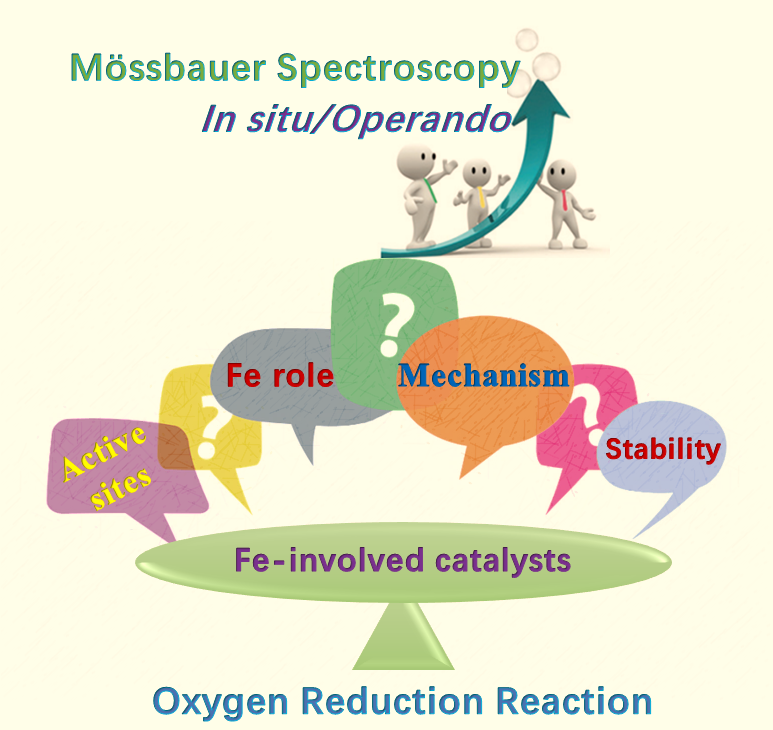
开发经济高效的氧还原反应(ORR)催化剂是一项重大挑战,尤其是在寻找铂等贵金属替代材料的研究中。近年来的显著进展推动电化学研究者利用储量丰富的材料开发高效ORR催化剂,其中铁(Fe)基材料因其优异的ORR催化性能而备受关注。尽管学界已认识到Fe在提升ORR催化活性中的关键作用,但材料属性与催化性能之间的关联仍尚不明确。对于设计无贵金属ORR电催化剂而言,理解氧电催化过程中的动态变化至关重要。穆斯堡尔谱(Mössbauer spectroscopy)在解析催化体系中Fe物种的结构特征方面具有独特优势,能够助力识别活性位点、阐明催化机理。本文通过综述领域内的典型研究案例,阐明了原位/工况57Fe 穆斯堡尔谱在各类铁基 ORR 催化材料中的应用,重点揭示了ORR催化的多个核心方面(如活性位点识别、稳定性评估、反应机理理解)。此外,本文还探讨了穆斯堡尔谱技术在该研究领域中的应用机遇与挑战,旨在揭示这一关键研究方向的潜在突破点与改进方向。
Sumbal Farid , 王军虎 . 原位/工况穆斯堡尔谱视角下的铁基氧还原反应电催化剂[J]. 电化学, 2026 , 32(1) : 2506261 . DOI: 10.61558/2993-074X.3578
Exploring cost-effective and efficient catalysts for oxygen reduction reaction (ORR) poses a significant challenge, especially in the pursuit of alternatives to precious metals like platinum. Significant advancements have driven electrochemists to develop efficient ORR catalysts using abundant materials, particularly iron (Fe)-based, known for their exceptional performance in ORR. While the crucial function of Fe in boosting ORR catalytic activity is recognized, the connection between material attributes and catalytic performance remains enigmatic. Understanding the dynamic processes involved in oxygen electrocatalysis is paramount for designing precious-metals-free ORR electrocatalysts. Mössbauer spectroscopy stands out as a powerful technique for deciphering the structural characteristics of Fe species in catalysis, facilitating the identification of active sites and the clarification of catalytic mechanisms. By showcasing noteworthy case studies within this review, we demonstrate the application of in-situ/operando 57Fe Mössbauer spectroscopy across diverse Fe-involved materials in ORR catalysis. This sheds light on various aspects of ORR catalysis, such as identifying active sites, assessing stability, and understanding the reaction mechanism. Our inquiry drives towards the opportunities and hurdles associated with Mössbauer spectroscopy, unveiling potential breakthroughs and avenues for enhancement within this pivotal research realm.
| [1] | Qiu Z Y, Lv Y, Li Y P, Li G, Qin J, Yang M Y, Li J H, Chai C X, Li T T, Zhou Y W, Han S, Yang H, Liu Z Y, Wang D S, Zhai H R, Liu W, Wan P, Ge R L, Wang J H, Gao R, Song Y J. Porous ultrathin carbon nanoshells embedded with abundant Fe-N-C sites toward oxygen reduction reaction[J]. ACS Catal., 2025, 15(12): 10082-10091. https://doi.org/10.1021/acscatal.5c01071. |
| [2] | Brea C, Hu G X. Dual-atom catalysts for the oxygen reduction reaction: Unraveling atomic structures under reaction conditions[J]. J. Am. Chem. Soc., 2025, 147(22): 19210-19216. https://doi.org/10.1021/jacs.5c04776. |
| [3] | Yin S, Yi H, Liu M, Yang J, Yang S, Zhang B W, Chen L, Cheng X, Huang H, Huang R, Jiang Y, Liao H, Sun S. An in situ exploration of how Fe/N/C oxygen reduction catalysts evolve during synthesis under pyrolytic conditions[J]. Nature Commun., 2024, 15(1): 6229. https://doi.org/10.1038/s41467-024-50629-x. |
| [4] | Mu?oz-Becerra K, Venegas R, Duque L, Zagal J H, Recio F J. Recent advances of Fe-N-C pyrolyzed catalysts for the oxygen reduction reaction[J]. Curr. Opin. Electrochem., 2020, 23: 154-161. https://doi.org/10.1016/j.coelec.2020.08.006. |
| [5] | Kumar K, Dubau L, Jaouen F, Maillard F. Review on the degradation mechanisms of metal-N-C catalysts for the oxygen reduction reaction in acid electrolyte: Current understanding and mitigation approaches[J]. Chem. Rev., 2023, 123(15): 9265-9326. https://doi.org/10.1021/acs.chemrev.2c00685. |
| [6] | Chen S M, Chen L K, Tian N, Hu S N, Yang S L, Shen J F, Tang J X, Wu D Y, Chen M S, Zhou Z Y, Sun S G. Double-shell confinement strategy enhancing durability of PtFeTi intermetallic catalysts for the oxygen reduction reaction[J]. ACS Catal., 2024, 14(22): 16664-16672. https://doi.org10.1021/acscatal.4c04779. |
| [7] | Ku Y P, Ehelebe K, Hutzler A, Bierling M, B?hm T, Zitolo A, Vorokhta M, Bibent N, Speck F D, Seeberger D, Khalakhan I, Mayrhofer K J J, Thiele S, Jaouen F, Cherevko S. Oxygen reduction reaction in alkaline media causes iron leaching from Fe-N-C electrocatalysts[J]. J. Am. Chem. Soc., 2022, 144(22): 9753-9763. https://doi.org/10.1021/jacs.2c02088. |
| [8] | Zhao K M, Wu D X, Wu W K, Nie J B, Geng F S, Li G, Shi H Y, Huang S C, Huang H, Zhang J, Zhou Z Y, Wang Y C, Sun S G. Identifying high-spin hydroxyl-coordinated Fe3+N4 as the active centre for acidic oxygen reduction using molecular model catalysts[J]. Nature Catal., 2025, 8(5): 422-435. https://doi.org/10.1038/s41929-025-01324-7. |
| [9] | Holby E F, Wang G F, Zelenay P. Acid stability and demetalation of PGM-free ORR electrocatalyst structures from density functional theory: A model for “single-atom catalyst” dissolution[J]. ACS Catal., 2020, 10(24): 14527-14539. https://doi.org/10.1021/acscatal.0c02856. |
| [10] | Bae G, Chung M W, Ji S G, Jaouen F, Choi C H. pH effect on the H2O2-induced deactivation of Fe-N-C catalysts[J]. ACS Catal., 2020, 10(15): 8485-8495. https://doi.org/10.1021/acscatal.0c00948. |
| [11] | Suntivich J, May K J, Gasteiger H A, Goodenough J B, Shao-Horn Y. A perovskite oxide optimized for oxygen evolution catalysis from molecular orbital principles[J]. Science, 2011, 334(6061): 1383-1385. https://doi.org/10.1126/science.1212858. |
| [12] | Wei C, Feng Z X, Scherer G G, Barber J, Shao-Horn Y, Xu Z J. Cations in octahedral sites: A descriptor for oxygen electrocatalysis on transition-metal spinels[J]. Adv. Mater., 2017, 29(23): 1606800. https://doi.org/10.1002/adma.201606800. |
| [13] | Ma L T, Chen S M, Wang D H, Yang Q, Mo F N, Liang G J, Li N, Zhang H Y, Zapien J A, Zhi C Y. Super-stretchable Zinc-air batteries based on an alkaline-tolerant dual-network hydrogel electrolyte[J]. Adv. Energy Mater., 2019, 9(12): 1803046. https://doi.org/10.1002/aenm.201803046. |
| [14] | Chakrabarti A, Ford M E, Gregory D, Hu R R, Keturakis C J, Lwin S, Tang Y D, Yang Z, Zhu M H, Ba?ares M A, Wachs I E. A decade+ of operando spectroscopy studies[J]. Catal. Today, 2017, 283: 27-53. https://doi.org/10.1016/j.cattod.2016.12.012. |
| [15] | Gao L K, Cui X, Sewell C D, Li J, Lin Z Q. Recent advances in activating surface reconstruction for the high-efficiency oxygen evolution reaction[J]. Chem. Soc. Rev., 2021, 50(15): 8428-8469. https://doi.org/10.1039/D0CS00962H. |
| [16] | Zhao S L, Yang Y C, Tang Z Y. Insight into structural evolution, active sites, and stability of heterogeneous electrocatalysts[J]. Angew. Chem. Int. Ed., 2022, 61(11): e202110186. https://doi.org/10.1002/anie.202110186. |
| [17] | Liu X, Meng J S, Zhu J X, Huang M, Wen B, Guo R T, Mai L Q. Comprehensive understandings into complete reconstruction of precatalysts: Synthesis, applications, and characterizations[J]. Adv. Mater., 2021, 33(32): 2007344. https://doi.org/10.1002/adma.202007344. |
| [18] | Hao Y M, Li Y F, Wu J X, Meng L S, Wang J L, Jia C L, Liu T, Yang X J, Liu Z P, Gong M. Recognition of surface oxygen intermediates on NiFe oxyhydroxide oxygen-evolving catalysts by homogeneous oxidation reactivity[J]. J. Am. Chem. Soc., 2021, 143(3): 1493-1502. https://doi.org/10.1021/jacs.0c11307. |
| [19] | Anantharaj S, Kundu S, Noda S. “The Fe Effect”: A review unveiling the critical roles of Fe in enhancing OER activity of Ni and Co based catalysts[J]. Nano Energy, 2021, 80: 105514. https://doi.org/10.1016/j.nanoen.2020.105514. |
| [20] | Chen S M, Ma L T, Huang Z D, Liang G J, Zhi C Y. In situ/operando analysis of surface reconstruction of transition metal-based oxygen evolution electrocatalysts[J]. Cell Rep. Phys. Sci., 2022, 3(1): 100729. https://doi.org/10.1016/j.xcrp.2021.100729. |
| [21] | Ba?ares M A, Guerrero-Pérez M O, Fierro J L G, Cortez G G. Raman spectroscopy during catalytic operations with on-line activity measurement (operando spectroscopy): a method for understanding the active centres of cations supported on porous materials[J]. J. Mater. Chem., 2002, 12(11): 3337-3342. https://doi.org/10.1039/B204494C. |
| [22] | Zhu Y P, Wang J L, Chu H, Chu Y C, Chen H M. In situ/operando studies for designing next-generation electrocatalysts[J]. ACS Energy Lett., 2020, 5(4): 1281-1291. https://doi.org/10.1021/acsenergylett.0c00305. |
| [23] | Cheng H W, Wang S, Chen G Y, Liu Z W, Caracciolo D, Madiou M, Shan S Y, Zhang J C, He H Y, Che R C, Zhong C J. Insights into heterogeneous catalysts under reaction conditions by in situ/operando electron microscopy[J]. Adv. Energy Mater., 2022, 12(38): 2202097. https://doi.org/10.1002/aenm.202202097. |
| [24] | Lippens P E, Jumas J C, Olivier-Fourcade J. Application of M?ssbauer spectroscopy to energy materials[M]////M?ssbauer spectroscopy: Applications in chemistry and materials science. Editor(s): Garcia Y, Wang J H, Zhang T. Wiley-VCH, 2023: 1-32. https://doi.org/10.1002/9783527824953. |
| [25] | Akbari N, Shah J H, Hu C, Nandy S, Aleshkevych P, Ge R, Farid S, Dong C, Zhang L, Chae K H, Xie W, Liu T, Wang J, Najafpour M M. A hypothesis on the function of high-valent Fe in NiFe (hydr)oxide in the oxygen-evolution reaction[J]. Angew. Chem Int. Ed., 2025, 64(6): e202418798. https://doi.org/10.1002/anie.202418798. |
| [26] | Li X N, Zhu K Y, Pang J F, Tian M, Liu J Y, Rykov A I, Zheng M Y, Wang X D, Zhu X F, Huang Y Q, Liu B, Wang J H, Yang W S, Zhang T. Unique role of M?ssbauer spectroscopy in assessing structural features of heterogeneous catalysts[J]. Appl. Catal. B. Environ., 2018, 224: 518-532. https://doi.org/10.1016/j.apcatb.2017.11.004. |
| [27] | Liu P J, Farid S, Liu M, Wang J H. In-situ/operando M?ssbauer spectroscopic investigations of Fe-involved metal hydroxide-based OER electrocatalysts[J]. Catal. Surv. Asia., 2024, 28(4): 361-374. https://doi.org/10.1007/s10563-024-09432-3. |
| [28] | Liu T, Huang H, Xu A R, Sun Z G, Liu D, Jiang S W, Xu L, Chen Y D, Liu X K, Luo Q Q, Ding T, Yao T. Manipulation of d-orbital electron configurations in nonplanar Fe-based electrocatalysts for efficient oxygen reduction[J]. ACS Nano, 2024, 18(41): 28433-28443. https://doi.org/10.1021/acsnano.4c11356. |
| [29] | Guo X M, Shi J, Li M, Zhang J H, Zheng X J, Liu Y J, Xi B J, An X G, Duan Z Y, Fan Q Q, Gao F, Xiong S L. Modulating coordination of iron atom clusters on N,P,S triply-doped hollow carbon support towards enhanced electrocatalytic oxygen reduction[J]. Angew. Chem. Int. Ed., 2023, 62(49): e202314124. https://doi.org/10.1002/anie.202314124. |
| [30] | Liu L D, Li W T, He X B, Yang J, Liu N. In situ/operando insights into the stability and degradation mechanisms of heterogeneous electrocatalysts[J]. Small, 2022, 18(7): 2104205. https://doi.org/10.1002/smll.202104205. |
| [31] | Lefèvre M, Proietti E, Jaouen F, Dodelet J P. Iron-based catalysts with improved oxygen reduction activity in polymer electrolyte fuel cells[J]. Science, 2009, 324(5923): 71-74. https://doi.org/10.1126/science.1170051. |
| [32] | Jasinski R. A new fuel cell cathode catalyst[J]. Nature, 1964, 201(4925): 1212-1213. https://doi.org/10.1038/2011212a0. |
| [33] | Jahnke H, Sch?nborn M, Zimmermann G. Organic dyestuffs as catalysts for fuel cells[J]. Top. Curr. Chem., 1976, 61: 133-181. https://doi.org/10.1007/BFb0046059. |
| [34] | Gupta S, Tryk D, Bae I, Aldred W, Yeager E. Heat-treated polyacrylonitrile-based catalysts for oxygen electroreduction[J]. J. Appl. Electrochem., 1989, 19(1): 19-27. https://doi.org/10.1007/BF01039385. |
| [35] | Wang W, Jia Q Y, Mukerjee S, Chen S L. Recent insights into the oxygen reduction electrocatalysis of Fe/N/C materials[J]. ACS Catal., 2019, 9(11): 10126-10141. https://doi.org/10.1021/acscatal.9b02583. |
| [36] | Levell Z, Yu S, Wang R Y, Liu Y Y. What is the "other" site in M-N-C?[J]. J. Am. Chem. Soc., 2025, 147(1): 603-609. https://doi.org/10.1021/jacs.4c12479. |
| [37] | Zhao J Y, Lian J, Zhao Z X, Wang X M, Zhang J J. A review of in-situ techniques for probing active sites and mechanisms of electrocatalytic oxygen reduction reactions[J]. Nano-Micro Lett., 2022, 15(1): 19. https://doi.org/10.1007/s40820-022-00984-5. |
| [38] | Tang M, Zou Y, Jiang Z, Ma P, Zhou Z, Zhu X, Bao J, Sun S G. Healing the structural defects of spinel MnFe2O4 to enhance the electrocatalytic activity for oxygen reduction reaction[J]. J. Energy Chem., 2024, 97: 12-19. https://doi.org/10.1016/j.jechem.2024.05.039. |
| [39] | Dessalle A, Quílez-Bermejo J, Fierro V, Xu F N, Celzard A. Recent progress in the development of efficient biomass-based ORR electrocatalysts[J]. Carbon, 2023, 203: 237-260. https://doi.org/10.1016/j.carbon.2022.11.073. |
| [40] | Kramm U I, Ni L, Wagner S. 57Fe M?ssbauer spectroscopy characterization of electrocatalysts[J]. Adv. Mater., 2019, 31(31): 1805623. https://doi.org/10.1002/adma.201805623. |
| [41] | Huang Z F, Wang J, Peng Y C, Jung C Y, Fisher A, Wang X. Design of efficient bifunctional oxygen reduction/evolution electrocatalyst: Recent advances and perspectives[J]. Adv. Energy Mater., 2017, 7(23): 1700544. https://doi.org/10.1002/aenm.201700544. |
| [42] | Wang J, Zhao C X, Liu J N, Ren D, Li B Q, Huang J Q, Zhang Q. Quantitative kinetic analysis on oxygen reduction reaction: A perspective[J]. Nano Mater. Sci., 2021, 3(3): 313-318. https://doi.org/10.1016/j.nanoms.2021.03.006. |
| [43] | Wang Y C, Huang L, Zhang P, Qiu Y T, Sheng T, Zhou Z Y, Wang G, Liu J G, Rauf M, Gu Z Q, Wu W T, Sun S G. Constructing a triple-phase interface in micropores to boost performance of Fe/N/C catalysts for direct methanol fuel cells[J]. ACS Energy Lett., 2017, 2(3): 645-650. https://doi.org/10.1021/acsenergylett.7b00071. |
| [44] | Chenitz R, Kramm U I, Lefèvre M, Glibin V, Zhang G X, Sun S H, Dodelet J P. A specific demetallation of Fe-N4 catalytic sites in the micropores of NC-Ar + NH3 is at the origin of the initial activity loss of the highly active Fe/N/C catalyst used for the reduction of oxygen in PEM fuel cells[J]. Energy Environ. Sci., 2018, 11(2): 365-382. https://doi.org/10.1039/C7EE02302B. |
| [45] | Xu X L, Zhang X M, Kuang Z C, Xia Z X, Rykov A I, Yu S S, Wang J H, Wang S L, Sun G Q. Investigation on the demetallation of Fe-N-C for oxygen reduction reaction: The influence of structure and structural evolution of active site[J]. Appl. Catal. B. Environ., 2022, 309: 121290. https://doi.org/10.1016/j.apcatb.2022.121290. |
| [46] | Jiao L, Li J K, Richard L L, Sun Q, Stracensky T, Liu E, Sougrati M T, Zhao Z P, Yang F, Zhong S C, Xu H, Mukerjee S, Huang Y, Cullen D A, Park J H, Ferrandon M, Myers D J, Jaouen F, Jia Q Y. Chemical vapour deposition of Fe-N-C oxygen reduction catalysts with full utilization of dense Fe-N4 sites[J]. Nat. Mater., 2021, 20(10): 1385-1391. https://doi.org/10.1038/s41563-021-01030-2. |
| [47] | Gao Y Y, Hou M, Qi M M, He L, Chen H P, Luo W Z, Shao Z G. New insight into effect of potential on degradation of Fe-N-C catalyst for ORR[J]. Front. Energy, 2021, 15(2): 421-430. https://doi.org/10.1007/s11708-021-0727-2. |
| [48] | Kumar K, Dubau L, Mermoux M, Li J K, Zitolo A, Nelayah J, Jaouen F, Maillard F. On the influence of oxygen on the degradation of Fe-N-C catalysts[J]. Angew. Chem. Int. Ed., 2020, 59(8): 3235-3243. https://doi.org/10.1002/anie.201912451. |
| [49] | Santori P G, Speck F D, Li J, Zitolo A, Jia Q Y, Mukerjee S, Cherevko S, Jaouen F. Effect of pyrolysis atmosphere and electrolyte pH on the oxygen reduction activity, stability and spectroscopic signature of FeNx moieties in Fe-N-C catalysts[J]. J. Electrochem. Soc., 2019, 166(7): F3311. https://doi.org/10.1149/2.0371907jes. |
| [50] | Goellner V, Baldizzone C, Schuppert A, Sougrati M T, Mayrhofer K, Jaouen F. Degradation of Fe/N/C catalysts upon high polarization in acid medium[J]. Phys. Chem. Chem. Phy., 2014, 16(34): 18454-18462. https://doi.org/10.1039/C4CP02882A. |
| [51] | Xu X L, Zhang X M, Xia Z X, Sun R L, Wang J H, Jiang Q K, Yu S S, Wang S L, Sun G Q. Fe-N-C with intensified exposure of active sites for highly efficient and stable direct methanol fuel cells[J]. ACS Appl. Mater. Interfaces, 2021, 13(14): 16279-16288. https://doi.org/10.1021/acsami.0c22968. |
| [52] | Zeng Y Q, Li X N, Wang J H, Sougrati M T, Huang Y Q, Zhang T, Liu B. In situ/operando M?ssbauer spectroscopy for probing heterogeneous catalysis[J]. Chem Catal., 2021, 1(6): 1215-1233. https://doi.org/10.1016/j.checat.2021.08.013. |
| [53] | Gütlich P, Bill E, Trautwein A X. M?ssbauer spectroscopy and transition metal chemistry[M]. Springer Berlin, Heidelberg, 2011. https://doi.org/10.1007/978-3-540-88428-6. |
| [54] | Liu K, Rykov A I, Wang J, Zhang T. Recent advances in the application of M?ssbauer spectroscopy in heterogeneous catalysis[J]. Adv. Catal., 2015, 58: 1-142. https://doi.org/10.1016/bs.acat.2015.09.001. |
| [55] | Scott R A, Lukehart C M. Application of physical methods to inorganic and bioinorganic chemistry[M]. Wiley & Sons Ltd, 2007. www.mrw.interscience.wiley.com/EIC/. |
| [56] | Joseyphus R J, Greneche J M. Fundamentals of 57Fe M?ssbauer spectrometry[M]. Springer Singapore, 2024. https://doi.org/10.1007/978-981-99-8653-8. |
| [57] | Mossbauer Effect Data Center[EB/OL]. http://www.medc.dicp.ac.cn. |
| [58] | Mineva T, Matanovic I, Atanassov P, Sougrati M T, Stievano L, Clémancey M, Kochem A, Latour J M, Jaouen F. Understanding active sites in pyrolyzed Fe-N-C catalysts for fuel cell cathodes by bridging density functional theory calculations and 57Fe M?ssbauer spectroscopy[J]. ACS Catal., 2019, 9(10): 9359-9371. https://doi.org/10.1021/acscatal.9b02586. |
| [59] | Sougrati M T, Goellner V, Schuppert A K, Stievano L, Jaouen F. Probing active sites in iron-based catalysts for oxygen electro-reduction: A temperature-dependent 57Fe M?ssbauer spectroscopy study[J]. Catal. Today, 2016, 262: 110-120. https://doi.org/10.1016/j.cattod.2015.10.017. |
| [60] | Gallenkamp C, Kramm U I, Proppe J, Krewald V. Calibration of computational M?ssbauer spectroscopy to unravel active sites in FeNC catalysts for the oxygen reduction reaction[J]. International J. Quantum Chem., 2021, 121(3): e26394. https://doi.org/10.1002/qua.26394. |
| [61] | Bouwkamp-Wijnoltz A L, Visscher W, van Veen J A R, Boellaard E, van der Kraan A M, Tang S C. On active-site heterogeneity in pyrolyzed carbon-supported iron porphyrin catalysts for the electrochemical reduction of oxygen:? An in situ M?ssbauer study[J]. J. Phys. Chem. B, 2002, 106(50): 12993-13001. https://doi.org/10.1021/jp0266087. |
| [62] | Shah J, Xie Q X, Kuang Z C, Ge R L, Zhou W H, Liu D R, Rykov A, Li X N, Luo J S, Wang J. In-situ/operando 57Fe M?ssbauer spectroscopic technique and its applications in NiFe-based electrocatalysts for oxygen evolution reaction[J]. J. Electrochem., 2022: 2108541. https://doi.org/10.13208/j.electrochem.210854. |
| [63] | Scherson D A, Fierro C, Yeager E B, Kordesch M E, Eldridge J, Hoffman R W, Barnes A. In situ M?ssbauer spectroscopy on an operating fuel cell[J]. J. Electroanal. Chem. Interfacial Electrochem., 1984, 169(1): 287-302. https://doi.org/10.1016/0022-0728(84)80090-X. |
| [64] | Chen Z, Jiang S, Kang G, Nguyen D, Schatz G C, Van Duyne R P. Operando characterization of iron phthalocyanine deactivation during oxygen reduction reaction using electrochemical tip-enhanced Raman spectroscopy[J]. J. Am. Chem. Soc., 2019, 141(39): 15684-15692. https://doi.org/10.1021/jacs.9b07979. |
| [65] | Zhang H G, Chung H T, Cullen D A, Wagner S, Kramm U I, More K L, Zelenay P, Wu G. High-performance fuel cell cathodes exclusively containing atomically dispersed iron active sites[J]. Energy Environ. Sci., 2019, 12(8): 2548-2558. https://doi.org/10.1039/C9EE00877B. |
| [66] | Zitolo A, Goellner V, Armel V, Sougrati M T, Mineva T, Stievano L, Fonda E, Jaouen F. Identification of catalytic sites for oxygen reduction in iron- and nitrogen-doped graphene materials[J]. Nat. Mater., 2015, 14(9): 937-942. https://doi.org/10.1038/nmat4367. |
| [67] | Scherson D A, Yao S B, Yeager E B, Eldridge J, Kordesch M E, Hoffman R W. In situ and ex situ Mossbauer spectroscopy studies of iron phthalocyanine adsorbed on high surface area carbon[J]. J. Phys. Chem., 1983, 87(6): 932-943. https://doi.org/10.1021/j100229a008. |
| [68] | Kramm U I, Herranz J, Larouche N, Arruda T M, Lefèvre M, Jaouen F, Bogdanoff P, Fiechter S, Abs-Wurmbach I, Mukerjee S, Dodelet J P. Structure of the catalytic sites in Fe/N/C-catalysts for O2-reduction in PEM fuel cells[J]. Phys. Chem. Chem. Phys., 2012, 14(33): 11673-11688. https://doi.org/10.1039/c2cp41957b. |
| [69] | Kramm U I, Lefèvre M, Larouche N, Schmeisser D, Dodelet J-P. Correlations between mass activity and physicochemical properties of Fe/N/C catalysts for the ORR in PEM fuel cell via 57Fe M?ssbauer spectroscopy and other techniques[J]. J. Am. Chem. Soc., 2014, 136(3): 978-985. https://doi.org/10.1021/ja410076f. |
| [70] | Koslowski U I, Abs-Wurmbach I, Fiechter S, Bogdanoff P. Nature of the catalytic centers of porphyrin-based electrocatalysts for the ORR: a correlation of kinetic current density with the site density of Fe-N4 centers[J]. J. Phys. Chem. C, 2008, 112(39): 15356-15366. https://doi.org/10.1021/jp802456e. |
| [71] | Zhu Y S, Zhang B S, Liu X, Wang D W, Su D S. Unravelling the structure of electrocatalytically active Fe-N complexes in carbon for the oxygen reduction reaction[J]. Angew. Chem. Int. Ed., 2014, 53(40): 10673-10677. https://doi.org/10.1002/anie.201405314. |
| [72] | Strickland K, Miner E, Jia Q Y, Tylus U, Ramaswamy N, Liang W T, Sougrati M T, Jaouen F, Mukerjee S. Highly active oxygen reduction non-platinum group metal electrocatalyst without direct metal-nitrogen coordination[J]. Nat. Commun., 2015, 6(1): 7343. https://doi.org/10.1038/ncomms8343. |
| [73] | Liu K X, Wu G, Wang G F. Role of local carbon structure surrounding FeN4 sites in boosting the catalytic activity for oxygen reduction[J]. J. Phys. Chem. C, 2017, 121(21): 11319-11324. https://doi.org/10.1021/acs.jpcc.7b00913. |
| [74] | Ni L M, Gallenkamp C, Paul S, Kübler M, Theis P, Chabbra S, Hofmann K, Bill E, Schnegg A, Albert B, Krewald V, Kramm U I. Active site identification in FeNC catalysts and their assignment to the oxygen reduction reaction pathway by in situ 57Fe M?ssbauer spectroscopy[J]. Adv. Energy Sustain. Res., 2021, 2(2): 2000064. https://doi.org/10.1002/aesr.202000064. |
| [75] | Ni L M, Gallenkamp C, Wagner S, Bill E, Krewald V, Kramm U I. Identification of the catalytically dominant iron environment in iron- and nitrogen-doped carbon catalysts for the oxygen reduction reaction[J]. J. Am. Chem. Soc., 2022, 144(37): 16827-16840. https://doi.org/10.1021/jacs.2c04865. |
| [76] | Li X N, Cao C S, Hung S F, Lu Y R, Cai W Z, Rykov A I, Miao S, Xi S B, Yang H B, Hu Z H, Wang J H, Zhao J Y, Alp E E, Xu W, Chan T S, Chen H M, Xiong Q H, Xiao H, Huang Y Q, Li J, Zhang T, Liu B. Identification of the electronic and structural dynamics of catalytic centers in single-Fe-atom material[J]. Chem, 2020, 6(12): 3440-3454. https://doi.org/10.1016/j.chempr.2020.10.027. |
| [77] | Luo F, Roy A, Sougrati M T, Khan A, Cullen D A, Wang X, Primbs M, Zitolo A, Jaouen F, Strasser P. Structural and reactivity effects of secondary metal doping into iron-nitrogen-carbon catalysts for oxygen electroreduction[J]. J. Am. Chem. Soc., 2023, 145(27): 14737-14747. https://doi.org/10.1021/jacs.3c03033. |
| [78] | Li J K, Sougrati M T, Zitolo A, Ablett J M, O?uz I C, Mineva T, Matanovic I, Atanassov P, Huang Y, Zenyuk I, Di Cicco A, Kumar K, Dubau L, Maillard F, Dra?i? G, Jaouen F. Identification of durable and non-durable FeNx sites in Fe-N-C materials for proton exchange membrane fuel cells[J]. Nat. Catal., 2021, 4(1): 10-29. https://doi.org/10.1038/s41929-020-00545-2. |
| [79] | Yan Y, Cheng H Y, Qu Z H, Yu R, Liu F, Ma Q W, Zhao S, Hu H, Cheng Y, Yang C Y, Li Z F, Wang X, Hao S Y, Chen Y Y, Liu M K. Recent progress on the synthesis and oxygen reduction applications of Fe-based single-atom and double-atom catalysts[J]. J. Mater. Chem. A, 2021, 9(35): 19489-19507. https://doi.org/10.1039/D1TA02769G. |
| [80] | Yuan K, Lützenkirchen-Hecht D, Li L B, Shuai L, Li Y Z, Cao R, Qiu M, Zhuang X D, Leung M K H, Chen Y Y, Scherf U. Boosting oxygen reduction of single iron active sites via geometric and electronic engineering: Nitrogen and phosphorus dual coordination[J]. J. Am. Chem. Soc., 2020, 142(5): 2404-2412. https://doi.org/10.1021/jacs.9b11852. |
| [81] | Jia Q Y, Liu E, Jiao L, Pann S, Mukerjee S. X-Ray absorption spectroscopy characterizations on PGM-free electrocatalysts: Justification, advantages, and limitations[J]. Adv. Mater., 2019, 31(31): 1805157. https://doi.org/10.1002/adma.201805157. |
| [82] | Kreider M E, Burke Stevens M. Material changes in electrocatalysis: An in Situ/operando focus on the dynamics of cobalt-based oxygen reduction and evolution catalysts[J]. ChemElectroChem, 2023, 10(3): e202200958. https://doi.org/10.1002/celc.202200958. |
| [83] | Choi C H, Baldizzone C, Polymeros G, Pizzutilo E, Kasian O, Schuppert A K, Ranjbar Sahraie N, Sougrati M-T, Mayrhofer K J J, Jaouen F. Minimizing operando demetallation of Fe-N-C electrocatalysts in acidic medium[J]. ACS Catal., 2016, 6(5): 3136-3146. https://doi.org/10.1021/acscatal.6b00643. |
| [84] | Lefèvre M, Dodelet J-P. Fe-based catalysts for the reduction of oxygen in polymer electrolyte membrane fuel cell conditions: determination of the amount of peroxide released during electroreduction and its influence on the stability of the catalysts[J]. Electrochim. Acta., 2003, 48(19): 2749-2760. https://doi.org/10.1016/S0013-4686(03)00393-1. |
| [85] | Choi C H, Lim H K, Chung M W, Chon G, Ranjbar Sahraie N, Altin A, Sougrati M-T, Stievano L, Oh H S, Park E S, Luo F, Strasser P, Dra?i? G, Mayrhofer K J J, Kim H, Jaouen F. The Achilles' heel of iron-based catalysts during oxygen reduction in an acidic medium[J]. Energy Environ. Sci., 2018, 11(11): 3176-3182. https://doi.org/10.1039/C8EE01855C. |
| [86] | Kumar K, Gairola P, Lions M, Ranjbar-Sahraie N, Mermoux M, Dubau L, Zitolo A, Jaouen F, Maillard F. Physical and chemical considerations for improving catalytic activity and stability of non-precious-metal oxygen reduction reaction catalysts[J]. ACS Catal., 2018, 8(12): 11264-11276. https://doi.org/10.1021/acscatal.8b02934. |
| [87] | Choi C H, Baldizzone C, Grote J-P, Schuppert A K, Jaouen F, Mayrhofer K J J. Stability of Fe-N-C catalysts in acidic medium studied by operando spectroscopy[J]. Angew. Chem. Int. Ed., 2015, 54(43): 12753-12757. https://doi.org/10.1002/anie.201504903. |
| [88] | Herranz J, Jaouen F, Lefèvre M, Kramm U I, Proietti E, Dodelet J P, Bogdanoff P, Fiechter S, Abs-Wurmbach I, Bertrand P, Arruda T M, Mukerjee S. Unveiling N-protonation and anion-binding effects on Fe/N/C-catalysts for O2 reduction in PEM fuel cells[J]. J. Phys. Chem. C, 2011, 115(32): 2042526. https://doi.org/10.1021/jp2042526. |
| [89] | Mamtani K, Singh D, Tian J, Millet J M, Miller J T, Co A C, Ozkan U S. Evolution of N-coordinated iron-carbon (FeNC) catalysts and their oxygen reduction (ORR) performance in acidic media at various stages of catalyst synthesis: An attempt at benchmarking[J]. Catal. Lett., 2016, 146(9): 1749-1770. https://doi.org/10.1007/s10562-016-1800-z. |
| [90] | Kramm U I, Lefèvre M, Bogdanoff P, Schmeisser D, Dodelet J P. Analyzing structural changes of Fe-N-C cathode catalysts in PEM fuel cell by M?ssbauer spectroscopy of complete membrane electrode assemblies[J]. J. Phys. Chem. Lett., 2014, 5(21): 3750-3756. https://doi.org/10.1021/jz501955g. |
| [91] | Bae G, Kim M M, Han M H, Cho J, Kim D H, Sougrati M T, Kim J, Lee K S, Joo S H, Goddard W A, Oh H S, Kim H, Jaouen F, Choi C H. Unravelling the complex causality behind Fe-N-C degradation in fuel cells[J]. Nat. Catal., 2023, 6(12): 1140-1150. https://doi.org/10.1038/s41929-023-01039-7. |
/
| 〈 |
|
〉 |