电化学(中英文) ›› 2025, Vol. 31 ›› Issue (11): 2504241. doi: 10.61558/2993-074X.3573
所属专题: “电子电镀及高端制造”专题文章
萨拉·德赫甘-切纳尔a, 哈米德·礼萨·扎雷a,*( ), 扎赫拉·穆罕默德普尔a, 玛丽亚姆·萨达特·米尔巴盖里-菲鲁扎巴德b
收稿日期:2025-04-24
修回日期:2025-06-24
接受日期:2025-07-21
发布日期:2025-07-21
出版日期:2025-07-21
通讯作者:
哈米德·礼萨·扎雷
E-mail:hrzare@yazd.ac.ir
Sara Dehghan-Chenara, Hamid R. Zarea,*(), Zahra Mohammadpoura, Maryam Sadat Mirbagheri-Firoozabadb
Received:2025-04-24
Revised:2025-06-24
Accepted:2025-07-21
Online:2025-07-21
Published:2025-07-21
Contact:
Hamid R. Zare
E-mail:hrzare@yazd.ac.ir
摘要:
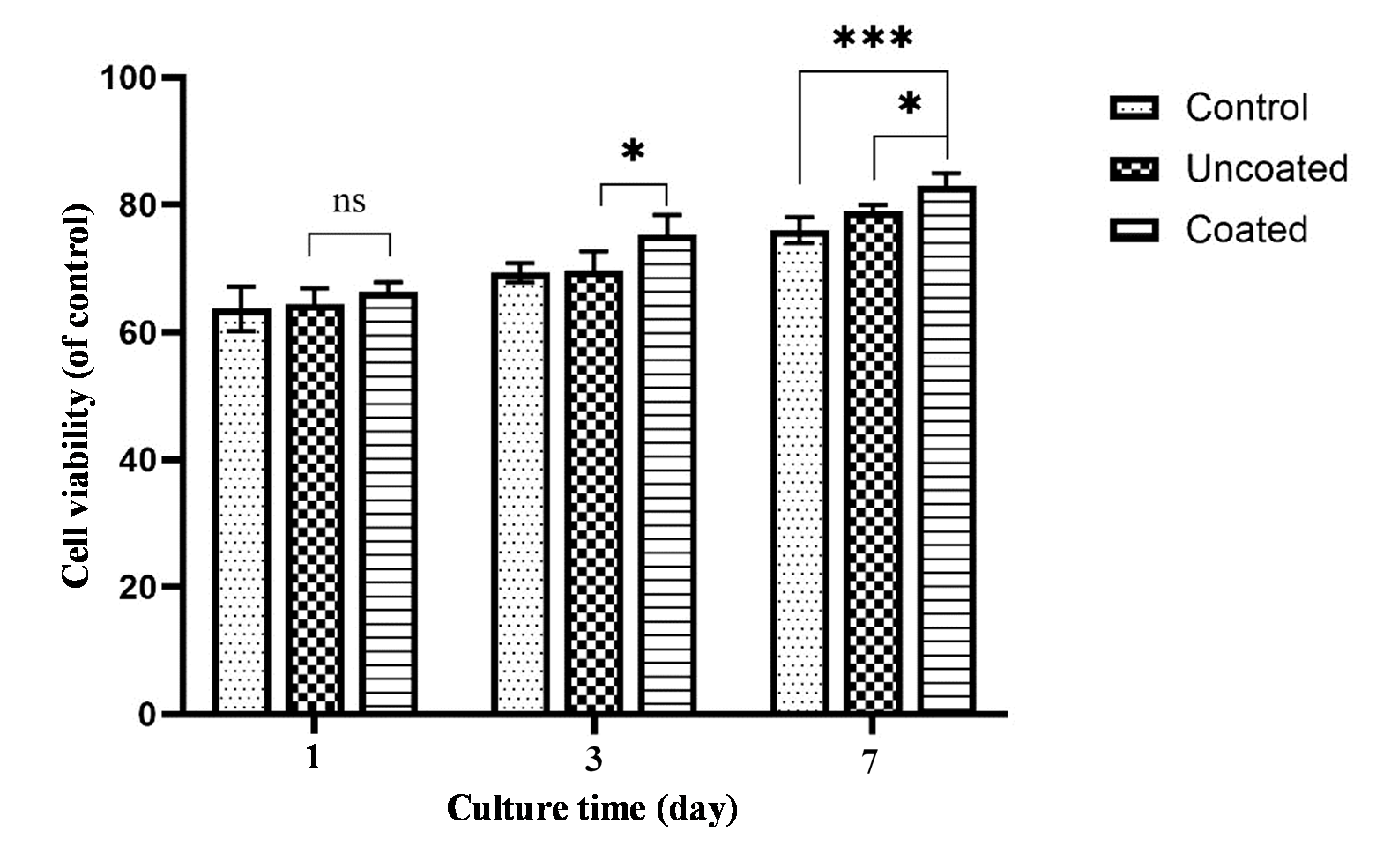
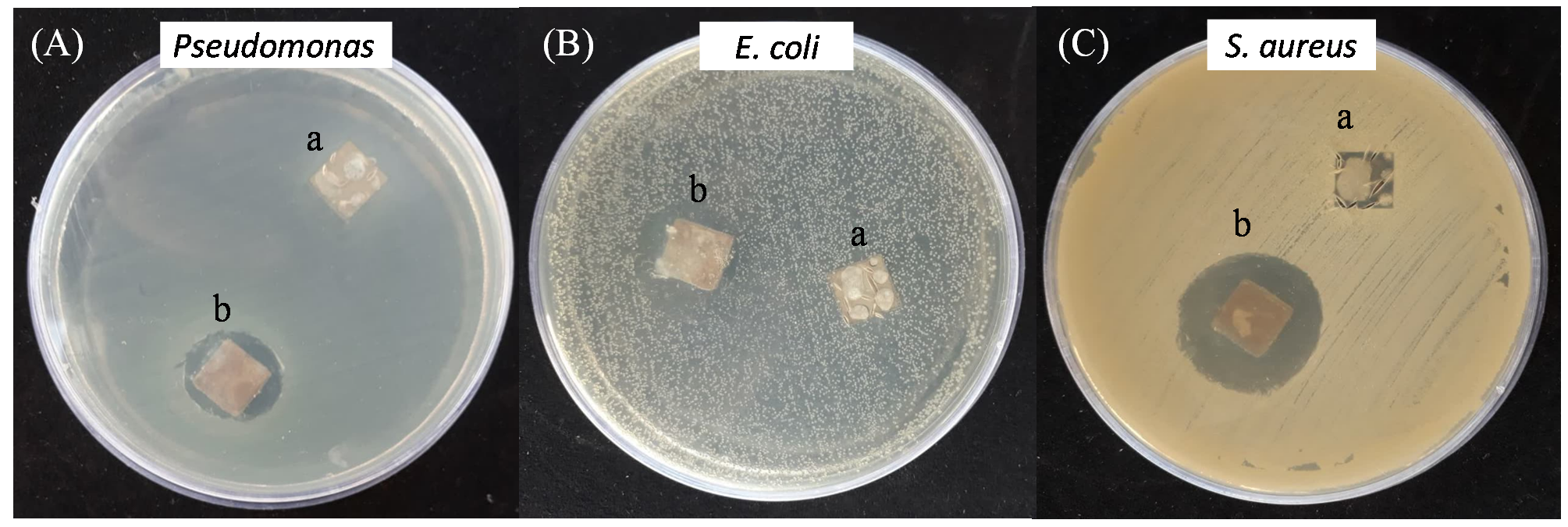
镁合金由于具有可降解性和生物相容性,被认为是生物植入物应用的有前景的候选材料。然而,其快速腐蚀仍然是实际应用的一个关键限制因素。本研究开发了一种多功能纳米复合涂层,旨在提高镁合金植入物的耐腐蚀性和抗菌性能。该涂层由表面修饰TiO2@Ag核-壳纳米颗粒的γ-环糊精金属有机框架(γ-CD MOF)构成,并嵌入到聚己内酯(PCL)基体中(PCL-TiO2@Ag/γ-CD MOF),与未修饰TiO2@Ag核-壳纳米颗粒的涂层(PCL/γ-CD MOF)进行比较。模拟体液浸泡测试结果表明,虽然PCL-TiO2@Ag/γ-CD MOF复合涂层初始的腐蚀速率高于PCL/γ-CD MOF涂层,但随着浸泡时间的推移,其性能显著改善。五天后,腐蚀抑制率达到95.44%,腐蚀速率降至1.70 mpy。此外,该复合涂层对大肠杆菌、假单胞菌和金黄色葡萄球菌均表现出较强的抗菌活性。研究证实,该涂层促进了成骨样MC3T3-E1细胞的生长和繁殖,从而具有无毒性和良好的生物相容性。本研究结果表明,PCL-TiO2@Ag/γ-CD MOF纳米复合涂层在可降解镁合金植入物中具有良好的生物相容性、抗菌性和耐腐蚀性,在生物医学领域具有广阔的应用前景。
萨拉·德赫甘-切纳尔, 哈米德·礼萨·扎雷, 扎赫拉·穆罕默德普尔, 玛丽亚姆·萨达特·米尔巴盖里-菲鲁扎巴德. 模拟体液中镁合金表面PCL-TiO2@Ag/γ-CD MOF纳米复合涂层的耐腐蚀、生物相容和抗菌性研究[J]. 电化学(中英文), 2025, 31(11): 2504241.
Sara Dehghan-Chenar, Hamid R. Zare, Zahra Mohammadpour, Maryam Sadat Mirbagheri-Firoozabad. Biocompatible and Antibacterial PCL-TiO2@Ag/γ-CD MOF Nanocomposite Coating for Corrosion Resistance of Magnesium Alloy in Simulated Body Fluid[J]. Journal of Electrochemistry, 2025, 31(11): 2504241.
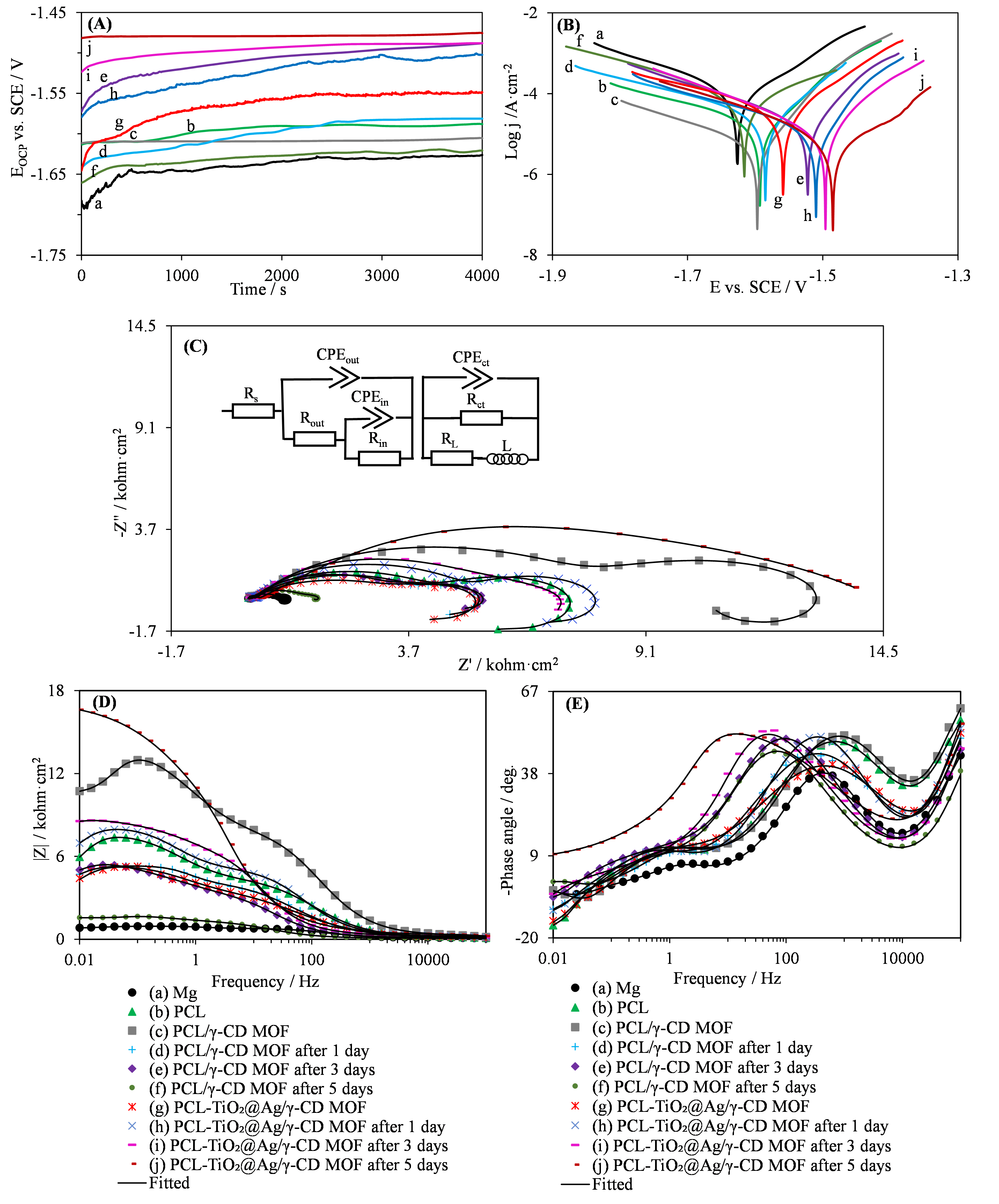
| Parameter | Ecorr (V) | Icorr (μA) | Jcorr (μA·cm−2) | βa (mV·dec-1) | −βc (mV·dec-1) | CR (mpy) | IE% | ||
|---|---|---|---|---|---|---|---|---|---|
| Mg | −1.62±0.02 | 8.22±0.23 | 41.10±1.14 | 54±2.08 | 60±3.73 | 37.35±1.04 | - | ||
| PCL | −1.58±0.02 | 1.37±0.06 | 6.87±0.31 | 48±4.49 | 72±2.05 | 6.24±0.28 | 83.27±0.36 | ||
| PCL/γ-CD MOF | The immersion time in the SBF solution | 0 | −1.59±0.02 | 0.43±0.01 | 2.14±0.06 | 39±3.16 | 86±4.98 | 1.95±0.06 | 94.77±0.25 |
| 1 day | −1.58±0.02 | 1.46±0.07 | 7.28±0.38 | 35±2.86 | 57±1.02 | 6.61±0.34 | 82.28±0.52 | ||
| 3 days | −1.48±0.02 | 1.50±0.02 | 7.47±0.12 | 30±1.92 | 77±3.23 | 6.79±0.11 | 81.81±0.80 | ||
| 5 days | -1.61±0.02 | 6.73±0.20 | 33.68±1.02 | 70±1.63 | 87±4.11 | 30.61±0.93 | 18.04±0.21 | ||
| PCL-TiO2@Ag/ γ-CD MOF | The immersion time in the SBF solution | 0 | −1.55±0.02 | 2.48±0.06 | 12.38±0.31 | 39±2.16 | 70±4.49 | 11.25±0.28 | 69.87±1.57 |
| 1 day | −1.50±0.02 | 0.84±0.03 | 4.19±0.14 | 23±3.68 | 89±4.11 | 3.81±0.13 | 89.79±0.62 | ||
| 3 days | −1.49±0.02 | 0.50±0.01 | 2.52±0.06 | 20±2.94 | 56±2.86 | 2.30±0.05 | 93.85±0.03 | ||
| 5 days | -1.48±0.02 | 0.37±0.03 | 1.87±0.16 | 43±4.49 | 46±3.30 | 1.70±0.14 | 95.44±0.52 | ||
| Parameters | Mg | PCL | PCL/γ-CD MOF | PCL-TiO2@Ag/γ-CD MOF | ||||||
|---|---|---|---|---|---|---|---|---|---|---|
| The immersion time in the SBF solution | The immersion time in the SBF solution | |||||||||
| 0 | 1 day | 3 days | 5 days | 0 | 1 day | 3 days | 5 days | |||
| Rs | 2.64 | 1.26 | 2.10 | 1.43 | 2.12 | 1.90 | 2.52 | 2.38 | 2.19 | 2.3 |
| Cout | 1.19×10⁻⁷ | 1.04×10⁻⁷ | 5.99×10⁻⁸ | 6.42×10⁻⁸ | 7.97×10⁻⁸ | 1.26×10⁻⁷ | 7.19×10⁻⁸ | 6.82×10⁻⁸ | 5.77×10⁻⁸ | 3.77×10⁻⁸ |
| Rout | 19.31 | 27.10 | 50.78 | 32.52 | 26.18 | 20.69 | 28.84 | 36.82 | 38.82 | 52.5 |
| Cin | 4.30×10⁻³ | 6.48×10⁻⁴ | 2.23×10⁻⁴ | 9.13×10⁻⁴ | 2.24×10⁻³ | 8.40×10⁻⁴ | 1.08×10v3 | 3.54×10⁻⁴ | 3.38×10⁻⁴ | 9.05×10⁻⁵ |
| Rin | 28.84 | 519.8 | 859.4 | 292.4 | 232.2 | 95.46 | 281.2 | 548.8 | 570.6 | 988.4 |
| CPEct | 3.07×10⁻⁵ | 1.39×10⁻⁵ | 5.40×10⁻⁶ | 4.65×10⁻⁵ | 5.12×10⁻⁵ | 7.53×10⁻⁵ | 4.20×10⁻⁵ | 3.05×10⁻⁵ | 1.92×10⁻⁵ | 1.67×10⁻⁵ |
| n | 0.81 | 0.72 | 0.75 | 0.70 | 0.75 | 0.66 | 0.64 | 0.80 | 0.79 | 0.55 |
| Rct | 140.46 | 923.4 | 1659.0 | 803.4 | 751.0 | 197.6 | 737.6 | 1120.0 | 1530.0 | 2220 |
| L | 2090 | 4772 | 18020 | 17800 | 27540 | 27480 | 10460 | 14940 | 14259 | 1980 |
| RL | 524.0 | 275.6 | 3254.0 | 1012.8 | 609.8 | 706.6 | 480.4 | 848.2 | 915.0 | 819.0 |
| χ2×10⁻³ | 3.63 | 1.04 | 2.28 | 1.04 | 0.83 | 4.31 | 1.64 | 2.18 | 0.95 | 9.90 |
| IE% | - | 84.78 | 91.53 | 82.51 | 81.29 | 28.91 | 80.95 | 87.46 | 90.81 | 93.67 |

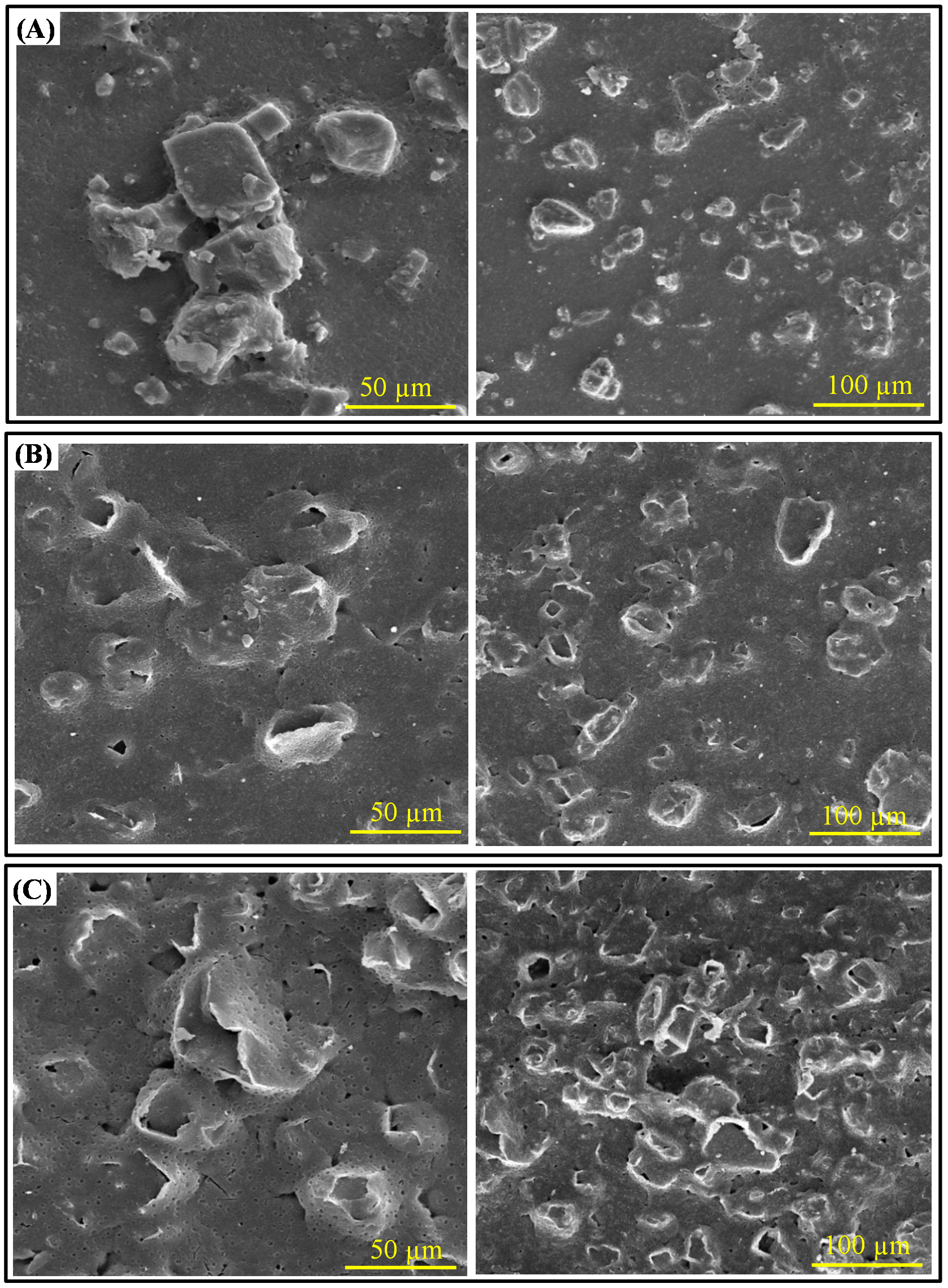
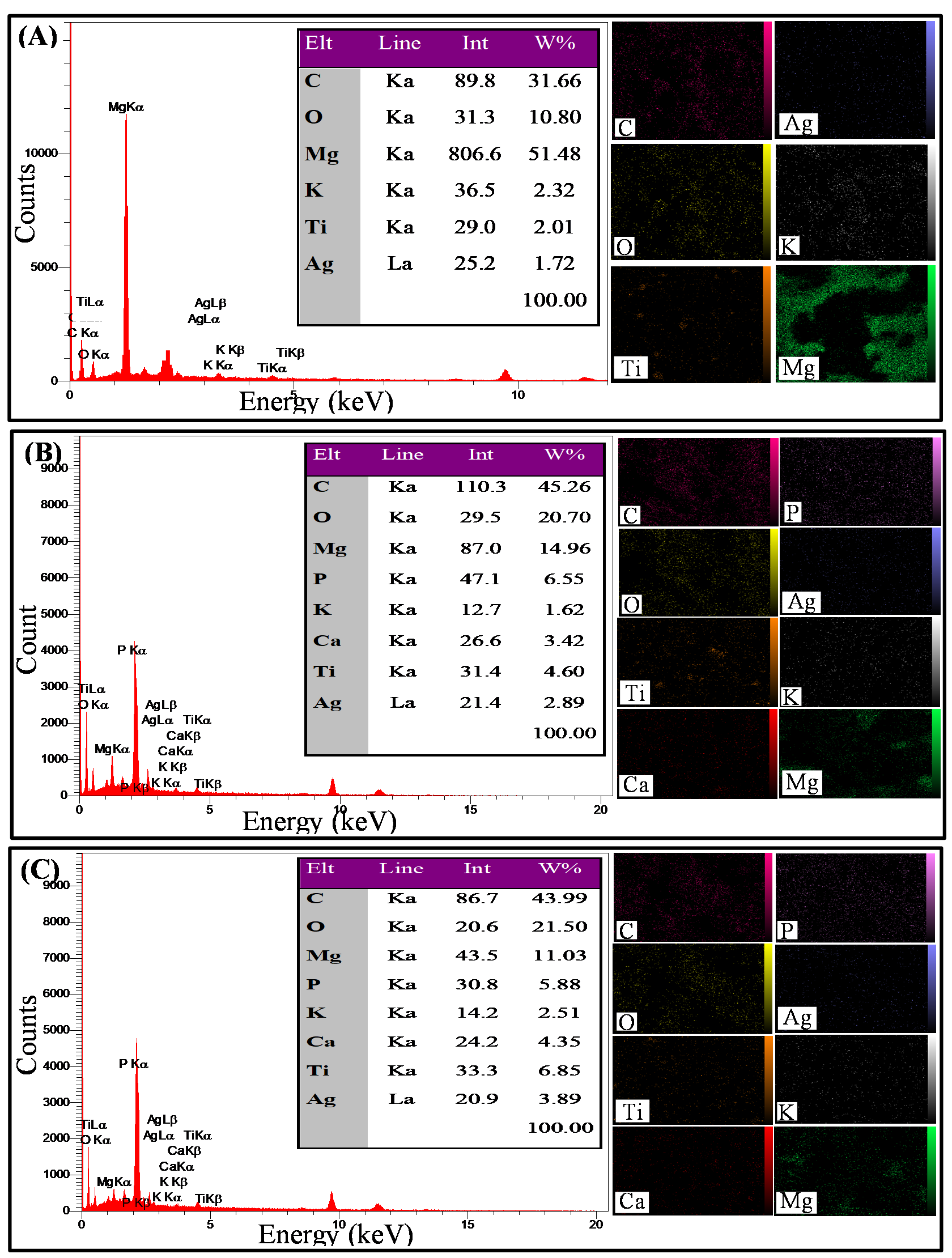
| [1] | Zhang T, Wang W, Liu J, Wang L Q, Tang Y J, Wang K S. A review on magnesium alloys for biomedical applications[J]. Front. bioeng. biotechnol., 2022, 10: 953344. https://doi.org/10.3389/fbioe.2022.953344. |
| [2] | He M F, Chen L X, Yin M, Xu S X, Liang Z Y. Review on magnesium and magnesium-based alloys as biomaterials for bone immobilization[J]. J. Mater. Res. Technol., 2023, 23: 4396-4419. https://doi.org/10.1016/j.jmrt.2023.02.037. |
| [3] | Tsakiris V, Tardei C, Clicinschi F. M. Biodegradable Mg alloys for orthopedic implants-A review[J]. J. Magnes. Alloy, 2021, 9(6): 1884-1905. https://doi.org/10.1016/j.jma.2021.06.024. |
| [4] | Peng F, Li H, Wang D H, Tian P, Tian Y Z, Yuan G Y, Xu D M, Liu X Y. Enhanced corrosion resistance and biocompatibility of magnesium alloy by Mg-Al-layered double hydroxide[J]. ACS Appl. Mater. Interfaces, 2016, 8(51): 35033-35044. https://doi.org/10.1021/acsami.6b12974. |
| [5] | Xu L P, Yu G N, Zhang E, Pan F, Yang K. In vivo corrosion behavior of Mg‐Mn‐Zn alloy for bone implant application[J]. J. Biomed. Mater. Res. A. 2007, 83(3): 703-711. https://doi.org/10.1002/jbm.a.31273. |
| [6] | Abdel Aal A. Protective coating for magnesium alloy[J]. J. Mater. Sci., 2008, 43: 2947-2954. https://doi.org/10.1007/s10853-007-1796-2. |
| [7] | Yang J X, Cui F Z, Lee I. S. Surface modifications of magnesium alloys for biomedical applications[J]. Ann. Biomed. Eng., 2011, 39: 1857-1871. https://doi.org/10.1007/s10439-011-0300-y. |
| [8] | Zhang G, Wu L, Tang A T, Ma Y L, Song G L, Zheng D J, Jiang B, Atrens A, Pan F. Active corrosion protection by a smart coating based on a MgAl-layered double hydroxide on a cerium-modified plasma electrolytic oxidation coating on Mg alloy AZ31[J]. Corros. Sci., 2018, 139: 370-382. https://doi.org/10.1016/j.corsci.2018.05.010. |
| [9] | Ren Y, Babaie E, Bhaduri S. B. Nanostructured amorphous magnesium phosphate/poly (lactic acid) composite coating for enhanced corrosion resistance and bioactivity of biodegradable AZ31 magnesium alloy[J]. Prog. Org. Coat., 2018, 118: 1-8. https://doi.org/10.1016/j.porgcoat.2018.01.014. |
| [10] | Johnson I, Akari K, Liu H. Nanostructured hydroxyapatite/poly (lactic-co-glycolic acid) composite coating for controlling magnesium degradation in simulated body fluid[J]. Nanotechnol., 2013, 24(37): 375103. https://doi.org/10.1088/0957-4484/24/37/375103. |
| [11] | Carangelo A, Acquesta A, Monetta T. In-vitro corrosion of AZ31 magnesium alloys by using a polydopamine coating[J]. Bioact. Mater., 2019, 4: 71-78. https://doi.org/10.1016/j.bioactmat.2018.12.005. |
| [12] | Shah S. A, Sohail M, Nakielski P, Rinoldi C, Zargarian S S, Kosik-Kozioł A, Ziai Y, Haghighat Bayan M A, Zakrzewska A, Rybak D. Integrating micro-and nanostructured platforms and biological drugs to enhance biomaterial-based bone regeneration strategies[J]. Biomacromolecules, 2024, 26(1): 140-162. https://doi.org/10.1021/acs.biomac.4c01133. |
| [13] | Mena-Morcillo E, Veleva L, Cerda-Zorrilla M, Soria-Castro M, Castro-Alcántara J C, Canul-Puc R C. Development and assessment of a multifunctional chitosan-based coating applied on AZ31 magnesium alloy: Corrosion resistance and antibacterial performance against Klebsiella Pneumoniae[J]. J. Magnes. Alloy, 2021, 9(6): 2133-2144. https://doi.org/10.1016/j.jma.2021.03.033. |
| [14] | Xu W, Yagoshi K, Asakura T, Sasaki M, Niidome T. Silk fibroin as a coating polymer for sirolimus-eluting magnesium alloy stents[J]. ACS Appl. Bio Mater., 2019, 3(1): 531-538. https://doi.org/10.1021/acsabm.9b00957. |
| [15] | Malikmammadov E, Tanir T. E, Kiziltay A, Hasirci V, Hasirci N. PCL and PCL-based materials in biomedical applications[J]. J. Biomater. Sci. Polym. Ed., 2018, 29(7-9): 863-893. https://doi.org/10.1080/09205063.2017.1394711. |
| [16] | Wong H. M, Yeung K. W, Lam K. O, Tam V, Chu P. K, Luk K. D, Cheung K. M. A biodegradable polymer-based coating to control the performance of magnesium alloy orthopaedic implants[J]. Biomater. 2010, 31(8): 2084-2096. https://doi.org/10.1016/j.biomaterials.2009.11.111. |
| [17] | Kim H K, Jang S J, Cho Y S, Park H H. Fabrication of nanostructured polycaprolactone (PCL) film using a thermal imprinting technique and assessment of antibacterial function for its application[J]. Polymers, 2022, 14(24): 5527. https://doi.org/10.3390/polym14245527. |
| [18] | Gao Y, Hassanbhai A. M, Lim J, Wang L, Xu C. Fabrication of a silver octahedral nanoparticle-containing polycaprolactone nanocomposite for antibacterial bone scaffolds[J]. RSC Adv., 2017, 7(17): 10051-10056. https://doi.org/10.1039/C6RA26063B. |
| [19] | Singh N, Batra U, Kumar K, Mahapatro A. Evaluation of corrosion resistance, mechanical integrity loss and biocompatibility of PCL/HA/TiO2 hybrid coated biodegradable ZM21 Mg alloy[J]. J. Magnes. Alloy, 2022, 10 (11): 3179-3204. https://doi.org/10.1016/j.jma.2021.10.004. |
| [20] | Rojas S, Devic T, Horcajada P. Metal organic frameworks based on bioactive components[J]. J. Mater. Chem. B., 2017, 5(14): 2560-2573. https://doi.org/10.1039/C6TB03217F. |
| [21] | Han Y Y, Liu W C, Huang J J, Qiu S W, Zhong H R, Liu D, Liu J Q. Cyclodextrin-based metal-organic frameworks (CD-MOFs) in pharmaceutics and biomedicine[J]. Pharm., 2018, 10(4): 271. https://doi.org/10.3390/pharmaceutics10040271. |
| [22] | Patyk-Kaźmierczak E, Warren M. R, Allan D. R, Katrusiak A. Pressure inverse solubility and polymorphism of an edible γ-cyclodextrin-based metal-organic framework[J]. Phys. Chem. Chem. Phys., 2017, 19(13): 9086-9091. https://doi.org/10.1039/C7CP00593H. |
| [23] | Trushina D B, Sapach A Y, Burachevskaia O A, Medvedev P V, Khmelenin D N, Borodina T. N, Soldatov M A, Butova V V. Doxorubicin-loaded core-shell UiO-66@SiO2 metal-organic frameworks for targeted cellular uptake and cancer treatment[J]. Pharm., 2022, 14(7): 1325. https://doi.org/10.3390/pharmaceutics14071325. |
| [24] | Abd El-Fattah W, Alfaifi M Y, Alkabli J, Ramadan H A, Shati A A, Elbehairi S E I, Elshaarawy R F, Kamal I, Saleh M M. Immobilization of ZnO-TiO2 nanocomposite into polyimidazolium amphiphilic chitosan film targeting improving its antimicrobial and antibiofilm applications[J]. Antibiotics, 2023, 12(7): 1110. https://doi.org/10.3390/antibiotics12071110. |
| [25] | Phan D N, Dorjjugder N, Saito Y, Taguchi G, Lee H, Lee J S, Kim I S. The mechanistic actions of different silver species at the surfaces of polyacrylonitrile nanofibers regarding antibacterial activities[J]. Mater. Today Commun., 2019, 21: 100622. https://doi.org/10.1016/j.mtcomm.2019.100622. |
| [26] | Ji X H, Ji W H, Pourhashem S, Wang W, Duan J Z, Hou B. (TiO2/Ag nanoparticles)@(chitosan-polyvinyl alcohol) core-shell nanofibers as novel anticorrosion and antibacterial improvers for epoxy coating systems[J]. J. Polym. Res., 2023, 30(6): 244. https://doi.org/10.1007/s10965-023-03569-x. |
| [27] | Nakata K, Fujishima A. TiO2 photocatalysis: Design and applications[J]. J. Photochem. Photobiol. C: Photochem. Rev., 2012, 13(3): 169-189. https://doi.org/10.1016/j.jphotochemrev.2012.06.001. |
| [28] | Dehghan-Chenar S, Zare H R, Mohammadpour Z. Chitosan-ImH@γ-CD: a pH-sensitive smart bio-coating to enhance the corrosion resistance of magnesium alloys in bio-implants[J]. RSC adv., 2024, 14 (45): 33301-33310. https://doi.org/10.1039/D4RA04744C. |
| [29] | Rocha M, Pereira C, Freire C. Au/Ag nanoparticles-decorated TiO2 with enhanced catalytic activity for nitroarenes reduction[J]. Colloids Surf. Physicochem. Eng. Aspects., 2021, 621: 126614. https://doi.org/10.1016/j.colsurfa.2021.126614. |
| [30] | Wang Z J, Ma Y D, Jiang Y, Zhou F, Wu Y L, Jiang H T, Wang R L, Xu Q, Hua C. Encapsulating quercetin in cyclodextrin metal-organic frameworks improved its solubility and bioavailability[J]. J. Sci. Food Agric., 2022, 102(9): 3887-3896. https://doi.org/10.1002/jsfa.11738. |
| [31] | Ganapathy M, Senthilkumar N, Vimalan M, Jeysekaran R, Potheher I. V. Studies on optical and electrical properties of green synthesized TiO2@Ag core-shell nanocomposite material[J]. Mater. Res. Express., 2018, 5(4): 045020. https://doi.org/10.1088/2053-1591/aab91b. |
| [32] | Parvathiraja C, Shailajha S. Plasmonic core-shell nanoparticles of Ag@TiO2 for photocatalytic degradation of Rhodamine B[J]. Appl. Nanosci., 2023, 13(6): 3677-3692. https://doi.org/10.1007/s13204-022-02499-2. |
| [33] | Chen H P, Shan Y P, Xu C L, Bilal M, Zhao P Y, Cao C, Zhang H J, Huang Q L, Cao L D. Multifunctional γ-cyclodextrin-based metal-organic frameworks as avermectins carriers for controlled release and enhanced acaricidal activity[J]. ACS Agric. Sci. Technol., 2023, 3(2): 190-202. https://doi.org/10.1021/acsagscitech.2c00295. |
| [34] | Min Y Z, Song G, Zhou L, Wang X Y, Liu P Y, Li J M. Silver@mesoporous anatase TiO2 core-shell nanoparticles and their application in photocatalysis and SERS sensing[J]. Coatings, 2022, 12(1): 64. https://doi.org/10.3390/coatings12010064. |
| [35] | Mahajan J, Jeevanandam P. Novel thermal decomposition approach for the synthesis of TiO2@Ag core-shell nanocomposites and their application for catalytic reduction of 4-nitrophenol[J]. J. Nanopart. Res., 2019, 21: 1-17. https://doi.org/10.1007/s11051-019-4500-y. |
| [36] | Mohammadpour Z, Zare H R. Fabrication of a pH-sensitive epoxy nanocomposite coating based on a Zn-BTC metal-organic framework containing benzotriazole as a smart corrosion inhibitor[J]. Cryst. Growth Des., 2021, 21(7): 3954-3966. https://doi.org/10.1021/acs.cgd.1c00284. |
| [37] | Dehghan‐Chenar S, Zare H R, Mohammadpour Z. Fabrication of a curcumin@Cu‐BTC MOF smart anti‐corrosion coating for copper[J]. ChemistrySelect, 2023, 8(45): e202303392. https://doi.org/10.1002/slct.202303392. |
| [38] | Makkar P, Kang H J, Padalhin A R, Park I, Moon B G, Lee B T. Development and properties of duplex MgF2/PCL coatings on biodegradable magnesium alloy for biomedical applications[J]. PLoS One 2018, 13(4): e0193927. https://doi.org/10.1371/journal.pone.0193927. |
| [39] | Zheng Q Y, Li J, Yuan W, Liu X M, Tan L, Zheng Y F, Yeung K W K, Wu S. Metal-organic frameworks incorporated polycaprolactone film for enhanced corrosion resistance and biocompatibility of Mg alloy[J]. ACS Sustain. Chem. Eng., 2019, 7(21): 18114-18124. https://doi.org/10.1021/acssuschemeng.9b05196. |
| [40] | Jamesh M, Kumar S, Sankara Narayanan T. Electrodeposition of hydroxyapatite coating on magnesium for biomedical applications[J]. J. Coat. Technol. Res., 2012, 9: 495-502. https://doi.org/10.1007/s11998-011-9382-6. |
| [41] | Srinivasan A, Ranjani P, Rajendran N. Electrochemical polymerization of pyrrole over AZ31 Mg alloy for biomedical applications[J]. Electrochim. Acta, 2013, 88: 310-321. https://doi.org/10.1016/j.electacta.2012.10.087. |
| [42] | Fekry A, El-Sherif R. M. Electrochemical corrosion behavior of magnesium and titanium alloys in simulated body fluid[J]. Electrochim. Acta, 2009, 54(28): 7280-7285. https://doi.org/10.1016/j.electacta.2009.07.047. |
| [43] | Zhang S X, Li J N, Song Y, Zhao C L, Zhang X N, Xie C Y, Zhang Y, Tao H R, He Y H, Jiang Y J. In vitro degradation, hemolysis and MC3T3-E1 cell adhesion of biodegradable Mg-Zn alloy[J]. Mater. Sci. Eng. C, 2009, 29(6): 1907-1912. https://doi.org/10.1016/j.msec.2009.03.001. |
| [44] | Gonzalez J, Hou R Q, Nidadavolu E P, Willumeit-Römer R, Feyerabend F. Magnesium degradation under physiological conditions-Best practice[J]. Bioact. Mater., 2018, 3(2): 174-185. https://doi.org/10.1016/j.bioactmat.2018.01.003. |
| [45] | Skoog D A, West D M, Holler F J, Crouch S R. Fundamentals of analytical chemistry((9th ed.)[M]. Cengage Learning, 2013. |
| [46] | Zheng Y. F, Gu X. N, Witte F. Biodegradable metals[J]. Mater. Sci. Eng. R Rep., 2014, 77: 1-34. https://doi.org/10.1016/j.mser.2014.01.001. |
| [47] | Zamani Khalajabadi S, Haji Abu A B, Ahmad N, Kadir M R A, Ismail A F, Nasiri R, Haider W, Redzuan N B H. Biodegradable Mg/HA/TiO2 nanocomposites coated with MgO and Si/MgO for orthopedic applications: A study on the corrosion, surface characterization, and biocompatability[J]. Coatings, 2017, 7(10): 154. https://doi.org/10.3390/coatings7100154. |
| [48] | Song Y W, Shan D Y, Chen R S, Zhang F, Han E H. Biodegradable behaviors of AZ31 magnesium alloy in simulated body fluid[J]. Mater. Sci. Eng. C, 2009, 29(3): 1039-1045. https://doi.org/10.1016/j.msec.2008.08.026. |
| [49] | Shi Y, Qi M, Chen Y, Shi P. MAO-DCPD composite coating on Mg alloy for degradable implant applications[J]. Mater. Lett., 2011, 65(14): 2201-2204. https://doi.org/10.1016/j.matlet.2011.04.037. |
| [50] | Martin R, Brown P. The effects of magnesium on hydroxyapatite formation in vitro from CaHPO4 and Ca4(PO4)2O at 37.4 °C[J]. Calcif. Tissue Int., 1997, 60: 538-546. https://doi.org/10.1007/s002239900277. |
| [51] | Antoniac I, Adam R, Biță A, Miculescu M, Trante O, Petrescu I. M, Pogărășteanu M. Comparative assessment of in vitro and in vivo biodegradation of Mg-1Ca magnesium alloys for orthopedic applications[J]. Materials, 2020, 14(1): 84. https://doi.org/10.3390/ma14010084. |
| No related articles found! |
| 阅读次数 | ||||||
|
全文 |
|
|||||
|
摘要 |
|
|||||